Fall in the basket: mushrooms, endives, chestnuts, quinces, and grapes, the delicate ones
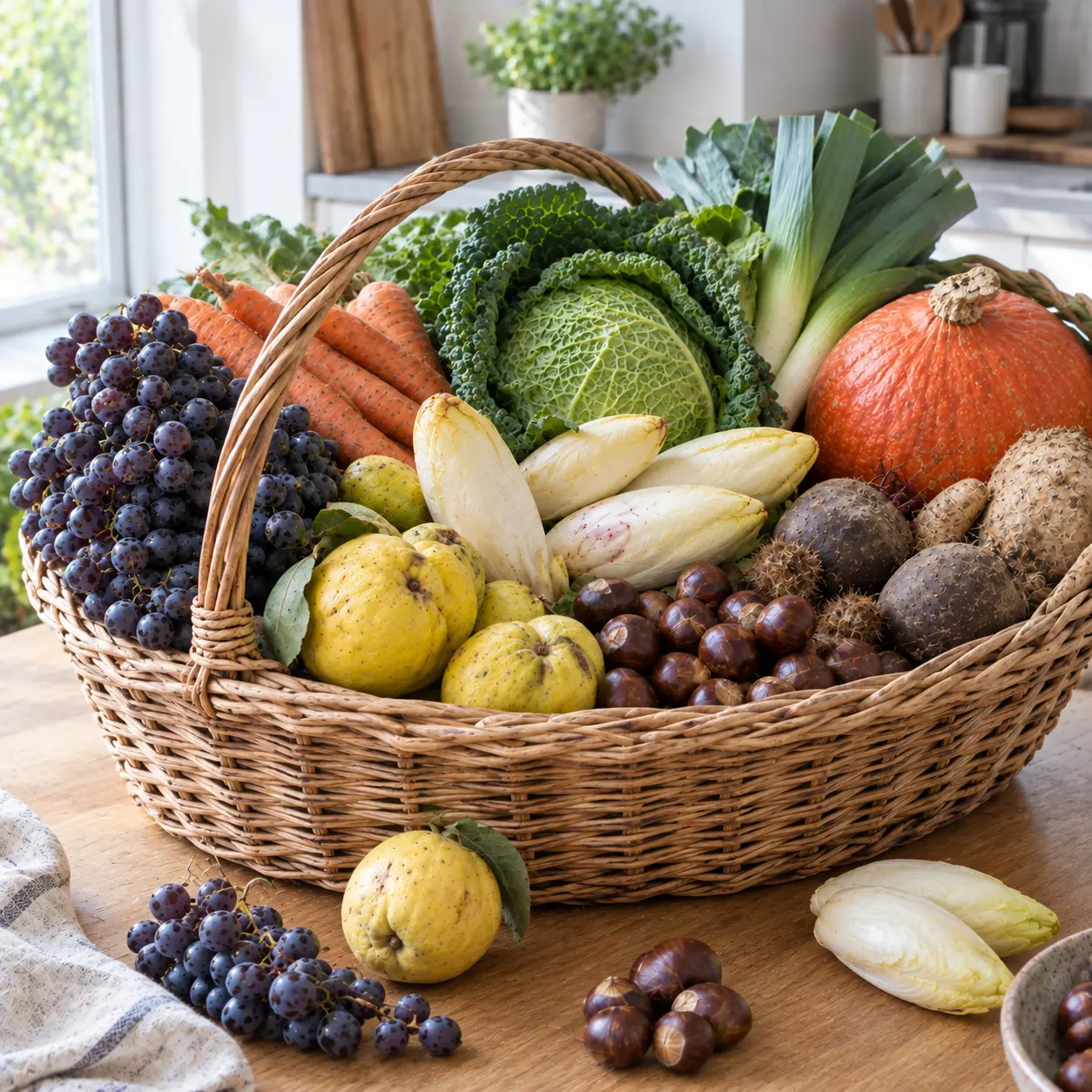
After the storage vegetables from episode 1, it's time for delicate and fragrant fruits and vegetables: mushrooms, endives, chestnuts, quinces, and grapes. These won't last all winter and don't tolerate carelessness. But there's good news!
…With a few simple steps, these products last much longer than you’d think. Discover a new episode in our series of articles on how to store and enjoy fall vegetables the right way!
Mushrooms: paper, cold, no water
- A paper bag, in the fridge. Avoid sealed plastic bags, which trap moisture. Some sources also advise against the vegetable drawer, as it’s too humid, and recommend keeping them away from strong-smelling produce like onions and leeks.
- Don’t wash them before storing. Cultivated mushrooms absorb water: clean them dry, with a brush or cloth, when you’re ready to cook.
- Count on 3 days to 1 week. The safest bet: cook them within the week.
- Slimy? If your mushrooms are really slimy, it’s best not to salvage them. That’s the one sign to skip cooking them.
Tip: slightly wrinkled or darkened mushrooms make excellent sautés, soups, or duxelles (minced mushrooms). The stems add great flavor to a broth.
Endives: keep them in the dark
- Protect them from light: they turn green and become more bitter.
- In the vegetable drawer, wrapped in a clean cloth. They’ll keep for up to a week.
- A damaged outer leaf? Just remove it, and the heart is usually intact.
Tip: cooking softens the bitterness. Braised in the oven or simmered with lentils, slightly tired endives become wonderfully mellow.
Chestnuts: fresh, fragile, and impatient
Chestnuts continue to lose moisture after harvest: they dry out quickly if left in the open air.
- Keep them cool, in a paper bag or mesh bag, like in the vegetable drawer. Avoid airtight plastic bags, where moisture builds up.
- The water test: when dropped in a bowl of water, wormy chestnuts tend to float. Set those aside.
- Already cooked and peeled? They’ll keep 4 to 5 days in the fridge. In the freezer, after peeling and blanching, they last several months.
Tip: cook the whole batch at once, then freeze in portions for soups, purées, and stews.
Quinces: the perfumers
Quinces have two special traits: they smell very strong, and they’re handled like a mini storage fruit.
- Ripe quinces keep for about 2 to 4 weeks in a cool place. Picked just ripe, they last 2 to 3 months in a cool (35 to 45°F) and well-ventilated spot.
- Keep them away from everything: their powerful aroma transfers to other fruits.
- Lay them flat, don’t stack: they’re sensitive to pressure and rot quickly where bruised. A wide, flat container is ideal.
- A bruised quince? Cook it first. Jelly is the best way to extend its life.
Grapes: on the bunch, never wet
- In the fridge, by the bunch. On the bunch, they keep longer.
- Don’t wash them before storing. Their natural waxy coating protects them: wash them at the last moment.
- Remove damaged or split grapes: a single grape can spoil the whole bunch.
- Too many grapes? Wash them, dry them, remove them from the stem, and freeze them flat before transferring to a bag. Avoid freezing them wet or as a whole bunch.
Tip: softened grapes can be roasted in the oven with a sprig of thyme, or turned into compote.
The order of priority
- Within the week: mushrooms, endives, opened grapes.
- Within 2 to 4 weeks: chestnuts and ripe quinces.
- In the freezer: peeled and blanched chestnuts, stemmed grapes.
All these fruits and vegetables are perfect for stews: a quince tagine, endives with lentils, a mushroom and chestnut ragout. Browse our recipes to make sure nothing goes to waste at the back of your fridge.