Drought then flooding: how climate change is disrupting production schedules
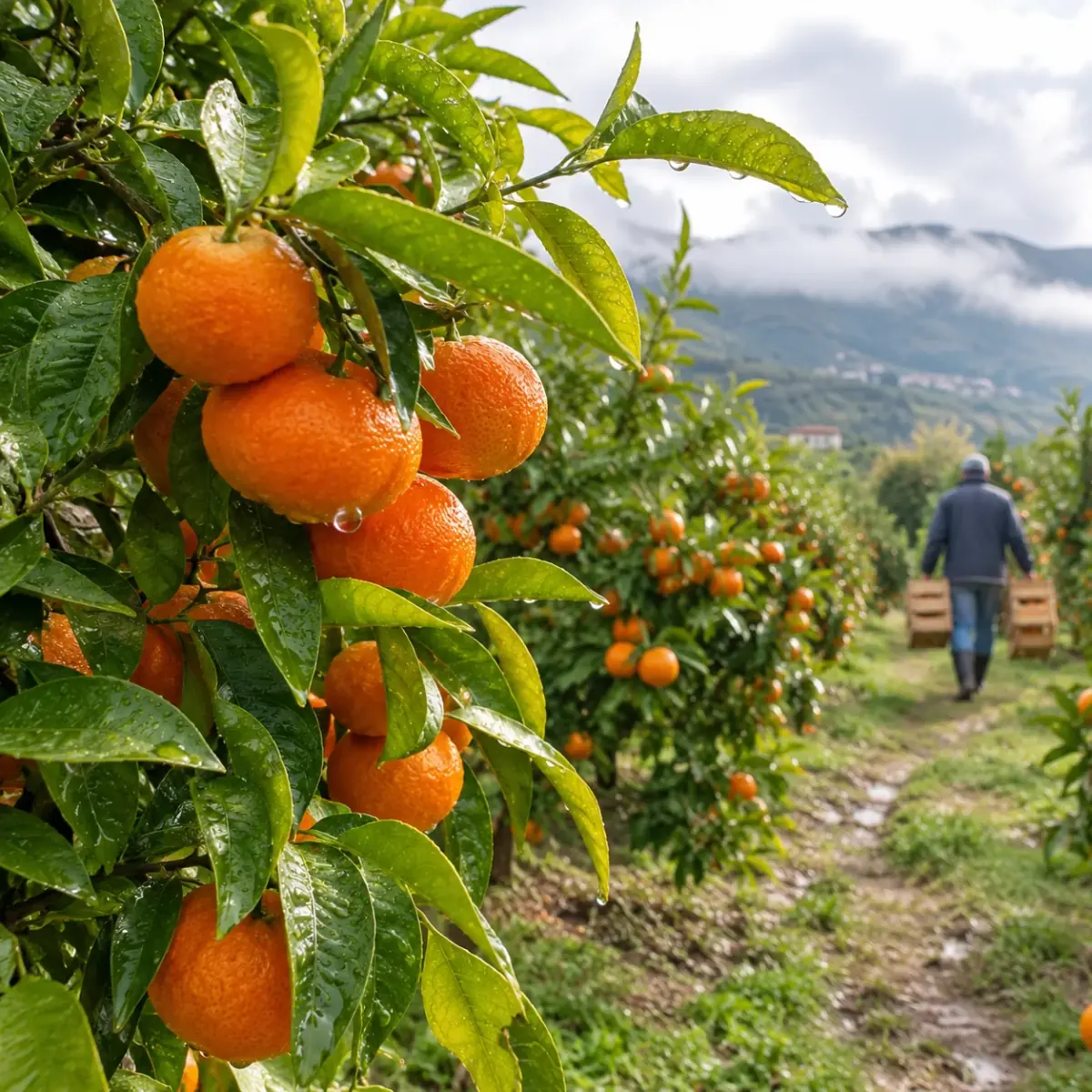
A few weeks ago, Corsica was waiting for rain. On October 20, 2026, it got far more than it could handle. Here's the story of this climate whiplash, seen from the clementine orchards, and what it could mean for your basket.
A flash rescue that couldn’t happen
We’d planned a flash rescue with one of our producers in Corsica. Why? Because the drought was leading to clementines too small for traditional distribution channels. Our role: finding them a way out.
Then the floods came.
The clementines suffered in turn, and this rescue ultimately couldn’t happen. This story reminds us of something important: you can’t help a producer from a distance with a rigid plan. You have to work hand in hand with them, know them, understand them, support them, anticipate alongside them everything that can be anticipated, and be there when they need us, even when the situation changes completely.
Here’s the context, with the numbers to back it up.
This sector usually runs like clockwork. Corsican clementines mean 705,000 trees across 1,690 hectares, 215 producers, around 2,000 jobs, and on average, 31,700 tons sold under PGI.
Volumes vary from year to year: 48,600 tons harvested in 2024, a record, then around 36,000 in 2025, 23% less. Some of this variation is natural: according to an industry professional, clementine trees alternate—it’s physiological. A summer under pressure According to the Regional Directorate for the Environment, Planning and Housing of Corsica, spring 2026 was the hottest on record, and June was the driest month ever observed, with only 4% of normal rainfall.
By July, the water deficit had reached 75%, and 70% of groundwater tables were at low to very low levels. Yet in early September, the industry remained optimistic: 36,000 to 37,000 tons shipped was the target, an earlier harvest (which started on October 11), and trees that had weathered the heat fairly well. One concern, though: some plots already had particularly small fruit after the dry spell. That’s why we’d planned a flash rescue—to help these farmers sell their production that was too small for traditional distribution channels.
Then came the deluge
On October 20, Météo-France issued a red alert for rain and flooding in Haute-Corse. In Solenzara, 640.5 mm fell over the entire episode, including 612.7 mm in 24 hours and 420.6 mm in just 3 hours—a national record. In the eastern plain (Ghisonaccia, Prunelli-di-Fiumorbo, Ventiseri), farms were flooded, irrigation systems destroyed, and trees washed away. Initial estimates suggest nearly 1,000 farms affected out of the island’s roughly 3,000, with about a hundred severely hit. In early November, another round of heavy rain struck Corse-du-Sud.
Size, taste, price: what this could mean for your basket
• Size. The PGI (Protected Geographical Indication) requires clementines between 46 and 68 mm. Fruit outside this range is sorted out. And the volume of these “non-standard” fruits is increasing season after season. • Taste. A producer in Haute-Corse fears the flavors may be diluted, even though the acidity of Corsican clementines is part of their reputation. Nothing’s confirmed yet: quality is judged harvest by harvest. • Price. Impossible to predict at this stage: there’s no consolidated assessment of losses or any serious revision of production forecasts yet.
What this reminds us
The same orchard can go from parched to flooded in just a few weeks. For a producer, it’s a nightmare. For us, it’s one more reason to stand by their side: giving value to what falls outside the norm, staying available when everything goes haywire, and honestly telling you what ends up in your basket. Now more than ever, we’re committed to those who grow great organic products. It’s a long-term effort, and we fully intend to keep at it—rest assured ;-)
Sources: Pleinchamp and FreshPlaza (September 2026); France 3 Corse and DRAAF Corse; Journal de la Corse (July 2026); Futura-Sciences and jamag.fr (October 2026); Corse Net Infos, AGRA and Journal de la Météo de l’Ain (October 26, 2026); Journal de la Météo de l’Ain (November 6, 2026). Flood damage assessment not finalized at the time of writing.