To fridge or not to fridge?
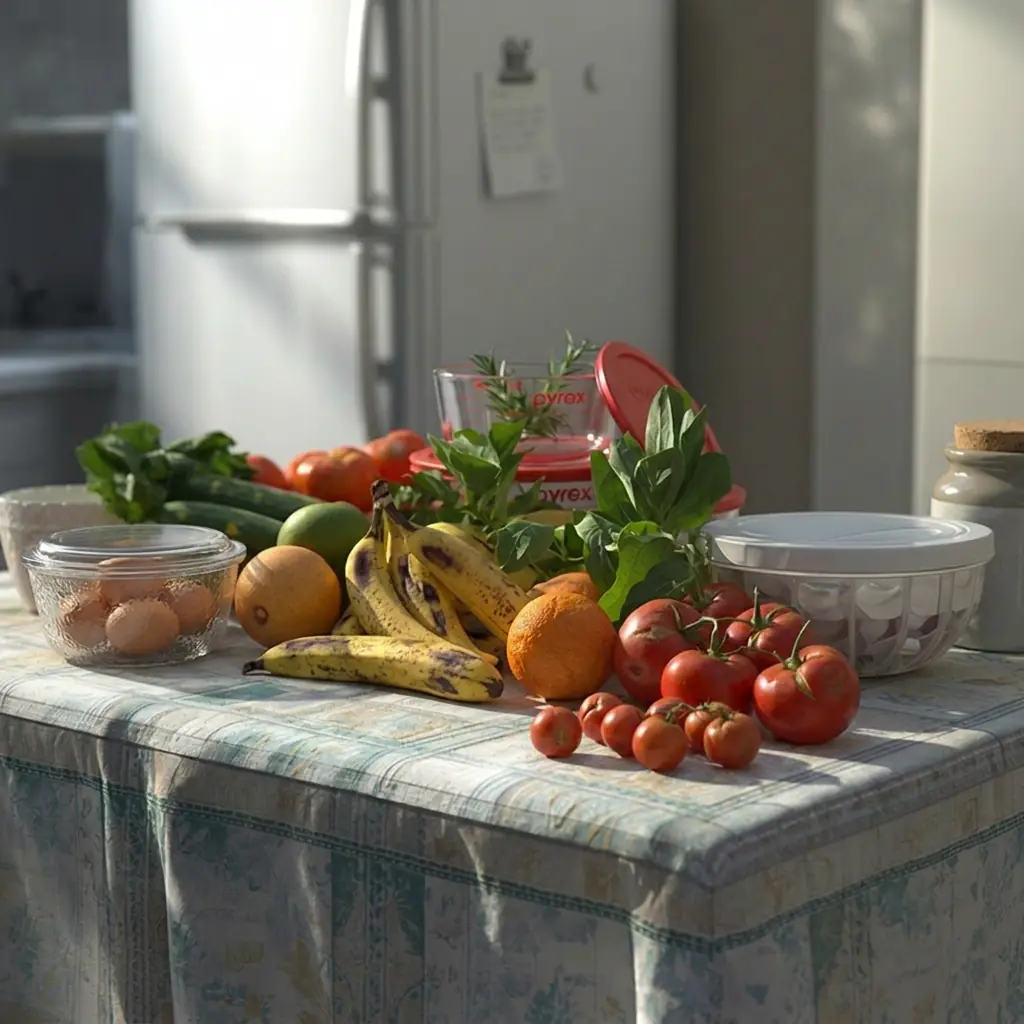
It's THE question that divides households — and the answer changes a lot when it's hot. Here's what you need to know.
In the fridge
Essential when temperatures exceed 25°C
Strawberries & berries
- In an open container with paper towel at the bottom.
- Last 3–4 days.
- Take out 15 min before eating: cold mutes the flavors.
Grapes, cherries
- Unwashed, in an open bowl or bag.
- Keep 5–7 days.
- Avoid any airtight container
Lettuce & mesclun
- Wrap in a slightly damp cloth.
- In the vegetable drawer, 3–5 days.
- If already wilted, soak 10 min in cold water to rehydrate.
Spinach, arugula
- Very sensitive to heat.
- Refrigerate as soon as you receive them, unwashed.
- Eat within 2–3 days.
Zucchini
- Vegetable drawer, unwashed.
- Warning: the coldest part of the fridge damages them (soft spots).
- Middle shelf only.
Green beans
- In an open bag or cloth.
- Keep 4–5 days.
- Take them out a few minutes before cooking for optimal texture.
Leeks, celery
- Standing upright in a glass of water in the fridge, like a bouquet.
- Stay crisp for up to 10 days.
Carrots, radishes, beets
- Cut off the tops before storing (they draw out moisture).
- In a sealed bag in the fridge, keep 2–3 weeks.
Out of the fridge
Cold damages these products
Tomatoes
- Cold permanently destroys their flavor and makes the flesh mealy.
- Store in the shade, stem side up, on a flat surface. During a heat wave, eat them quickly.
Peaches, nectarines, apricots
- Let ripen at room temperature, flat and not stacked.
- Once ripe and if it’s really too hot, 1–2 days in the fridge max — then take out 30 min before eating.
Potatoes
- Cool, dark, and dry place — no exceptions.
- Light turns them green (toxic solanine).
- Never with onions: they speed up each other’s sprouting.
Onions, garlic, shallots
- Dry and ventilated place, never in a closed basket.
- Keep several weeks this way. Braided garlic keeps up to 6 months.
Bananas
- Cold blackens the skin even if the flesh stays good.
- Store away from other fruits and ideally hanging — contact speeds up bruising.
Eggplants, bell peppers
- Cold softens them quickly.
- At room temperature in the shade, eat within 4–5 days.
- During severe heat waves, the bottom of the fridge is a last resort.
Cucumbers
- Sensitive to temperature shocks.
- At room temperature ideally, otherwise in the least cold part of the fridge, wrapped in a dry cloth.
- Special attention Ultra-fragile, eat first
Mushrooms
- Paper bag only (never plastic), in the fridge.
- Last 3–4 days. If slightly soft: sauté them immediately.
Basil & fresh herbs
- The fridge blackens basil, heat wilts it.
- Solution: in a glass of water on the counter, in the shade, away from a sunny window.
Parsley and cilantro
- In the fridge in a glass of water, covered with a bag.
The special case of freezing
When the heat exceeds what normal storage can handle, freezing is an underrated solution. It doesn’t work for everything — a frozen tomato can’t be eaten raw — but it saves a lot of situations.
Berries, peas, green beans, chopped herbs (in ice cube trays with a drizzle of oil), blanched spinach: all of these freeze very well and give you several months of leeway. Better to freeze at perfect ripeness than let it rot on the counter.
Key takeaways for heat wave weeks
As soon as you receive your basket, do a quick first sort: what’s very ripe or very fragile (strawberries, herbs, spinach,…) goes into your meals for the first 48 hours. The rest gets organized according to the tips above.
Five minutes of sorting when you receive your basket means zero food waste by the end of the week.
Our fruits and vegetables come directly from producers — they’re often fresher than what you’ll find in supermarkets. But the heat doesn’t discriminate. These tips apply to everything in your kitchen, no matter where it comes from.