Damp cloths and paper towels: your fruits and vegetables' two best friends!
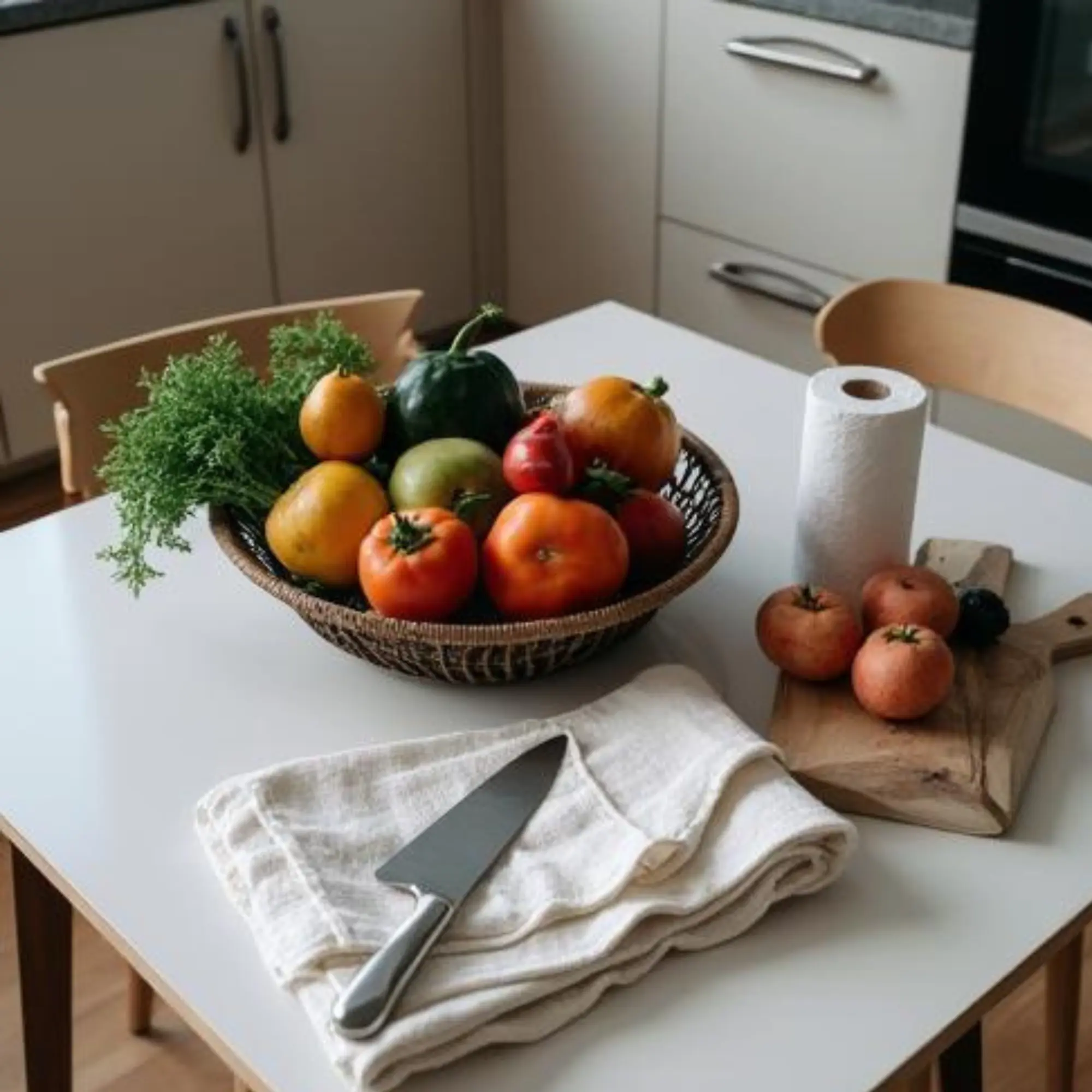
Two "tools" you already have in your kitchen — and they could save half your basket.
Every week, millions of perfectly edible fruits and vegetables end up in the trash — not because they were bad, but because they dried out too fast, went soft too soon, or turned brown from a lack of attention. The good news? A simple piece of cloth and a sheet of paper are often all it takes to make a world of difference. No need to invest in an CHF 80.00 vacuum container.
Why does our produce spoil so quickly?
Before we talk solutions, let’s understand the problem. Fruit and vegetable deterioration is largely caused by two complementary yet opposing enemies: too much moisture on one hand, too little on the other.
Too moist, and vegetables get moldy. Too dry, and they shrivel, go soft, and lose their vitamins along with their will to live. The refrigerator, as handy as it is, makes this second problem worse: its cold, circulating air dehydrates food at a surprising rate. Monday’s firm zucchini becomes Wednesday’s limp zucchini — not because it was bad, but because it’s thirsty.
This is exactly where our two everyday heroes come in.
The damp cloth
It creates a microclimate around the vegetable — moist enough to prevent drying out, airy enough to let it breathe. The vegetable stays in its own natural environment, neither drowned nor parched. ## Paper towels They absorb the excess moisture that produce naturally releases after being picked. Without them, this condensation builds up, stagnates, and becomes the perfect breeding ground for mold.
A simple rule: who’s thirsty, who’s sweating?
The key to choosing the right tool is to ask yourself one question: does this vegetable tend to dry out or sweat?
Vegetables and fruits: each has its problem and the right tool
Carrots, radishes, celery: Dry out and go soft - > Damp cloth
Swiss chard, spinach, lettuce: Dry out quickly - > Damp cloth
Mushrooms: Collect condensation and get moldy - > Paper towels
Strawberries, raspberries, cherries: Release water and get moldy - > Paper towels
Zucchini, cucumbers, bell peppers: Dry out AND collect condensation - > Both
Broccoli, cauliflower: Turn yellow and lose moisture - > Damp cloth
Fresh herbs (parsley, cilantro): Wilt very quickly - > Damp cloth
How to use them properly — because the details matter
A cloth that’s too wet is almost as bad as no cloth at all. Here’s the method that actually works:
Damp cloth method
1 Dampen the cloth by wringing it out — it should be barely moist to the touch, never soaking wet. Excess water creates exactly the problem you’re trying to avoid. 2 Wrap the vegetables loosely — air needs to circulate slightly. A cloth that’s too tight creates condensation at the contact points. 3 Replace the cloth every 2 to 3 days — a cloth that stays damp too long can develop bacteria. Wash it at 60°C and start again. 4 Don’t wash your vegetables before wrapping them — a wet surface speeds up deterioration. Always wash just before cooking.
Paper towel method
1 Line the bottom of your container with one or two sheets of paper towel before placing the food inside — never on top. 2 For berries, change the paper as soon as it gets damp — saturated paper doesn’t absorb anything anymore and becomes counterproductive. 3 Leave the container slightly open or with holes — air needs to circulate. An airtight container traps ripening gases and speeds up softening.
What about zero waste?
To stay true to our philosophy, here’s how to use these two allies without creating new waste:
For the cloth, choose a cotton or linen kitchen towel that you wash regularly. It’s infinitely reusable and much more effective than a plastic bag. Fabric produce bags — now easy to find — do exactly the same job even more conveniently.
For paper towels, one well-placed square is better than ten sheets piled up. And if you’re looking for a zero-waste alternative, washable cotton cloths work great — the principle is the same.