When the weather throws a tantrum: what spring 2026 means for your basket
Deceptive warmth, late frost, vegetation ahead of schedule… Here's why some vegetables are running late — and why you might find carrots that are even more "temperamental" than usual.
One principle guides us: the weather calls the shots!
Our producers work with nature, not against it.
Every season brings its share of surprises — good and not so good. And this early 2026 is giving us a perfect demonstration of this principle, in fast-forward mode.
A mild winter. A March that felt like April. Then, Mother Nature hit us with a brutal cold snap in late March and early April, with frosts that nobody had ordered…yet aren’t unusual for this time of year.
The result: our partner producers in the Seeland are navigating by sight, and your basket contents faithfully reflect these ups and downs.
An unusually mild winter 2025-2026: nature woke up too early
To understand what’s happening in the fields today, we need to go back to January. Early 2026 had actually started on a cold note, with chilly temperatures and frequent frosts across the Swiss plateau (Météo Radar Suisse). Nothing unusual for January.
But from mid-January, the thermometer took an unexpected turn. February 2026 was significantly above average, with a surplus of over 3 degrees, ranking it as the seventh warmest February since 1864 (MeteoNews). In other words: a historically mild February that woke up vegetation well ahead of schedule.
March then continued this trend. A February that was 3.3°C warmer than normal across Switzerland, followed by a March that was 2.8°C warmer during its first two weeks, had direct consequences on nature: it’s currently running at least ten days to two weeks ahead of the usual calendar.
For plants, it’s like receiving the “go” signal for spring several weeks early. Buds open, first shoots emerge, fruit trees are covered in blossoms. All of this is beautiful, spring-like… and very risky.
The trap of “false seasonality”: earlier doesn’t mean safer
This is where things get complicated — and where farmers start checking weather forecasts with a certain anxiety.
The increased warmth of winter 2025-2026 advanced the vegetative cycle of crops by several weeks. However, weather models predicted frost in late March across much of the territory. This mismatch creates a “false seasonality” where vegetation, in full growth, is hit by freezing temperatures it would normally have withstood during winter dormancy. (Pleinchamp)
In vegetable grower speak: the plant has come out of its dormancy, it’s vulnerable, and the frost arrives anyway. Exactly the scenario we wanted to avoid.
A plant’s frost resistance depends crucially on its stage of development. The more advanced the vegetation, the more its sensitivity to cold increases exponentially. An emerged flower can be damaged at just -1.5°C to -3°C. A young fruit in the fruit-set phase can be destroyed by even a very light frost, around -0.5°C. (Pleinchamp)
In spring particularly, ground frost can cause damage to agriculture and horticulture. MeteoSwiss monitors this risk specifically between March 15 and October 31, with alerts for low altitudes. This vigilance isn’t just routine administrative caution: it’s the reality of Swiss fields, spring after spring.
What this concretely changes for the Seeland, our vegetable garden
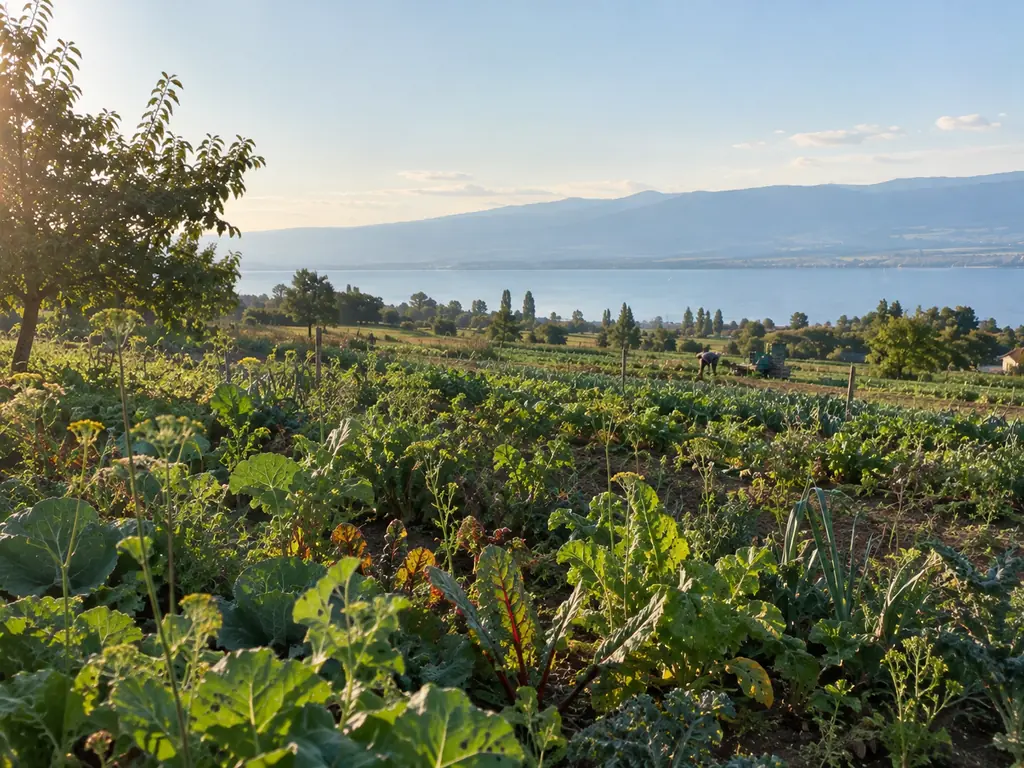
Our partner producers work mainly in the Seeland, the vast plain between the lakes of Neuchâtel, Bienne, and Morat. The Seeland is Switzerland’s largest vegetable-growing region, with fertile black peat soil that hosts a large portion of national organic production. It’s the “vegetable garden of Switzerland” — and this spring 2026, this garden is going through a turbulent period.
Vegetation, which is very advanced this year after a very mild late winter, risks suffering significant damage. Fruit growers fear reliving a situation similar to 2021, when two-thirds of the apricot harvest was lost, representing a shortfall of CHF 25 million (RTS). A painful reference that remains in the memory of everyone in the Swiss agricultural sector.
With climate change, this type of situation is bound to repeat. “We’ve observed with various climate analysis indices in recent years that spring is arriving earlier. We’re ending up with vegetation that’s increasingly ahead of schedule,” explains meteorologist Mehdi Mattou (RTS).
For the vegetable growers of the Seeland who produce the field-grown vegetables in your baskets, the consequences are concrete and multiple.
Field crops, first in line
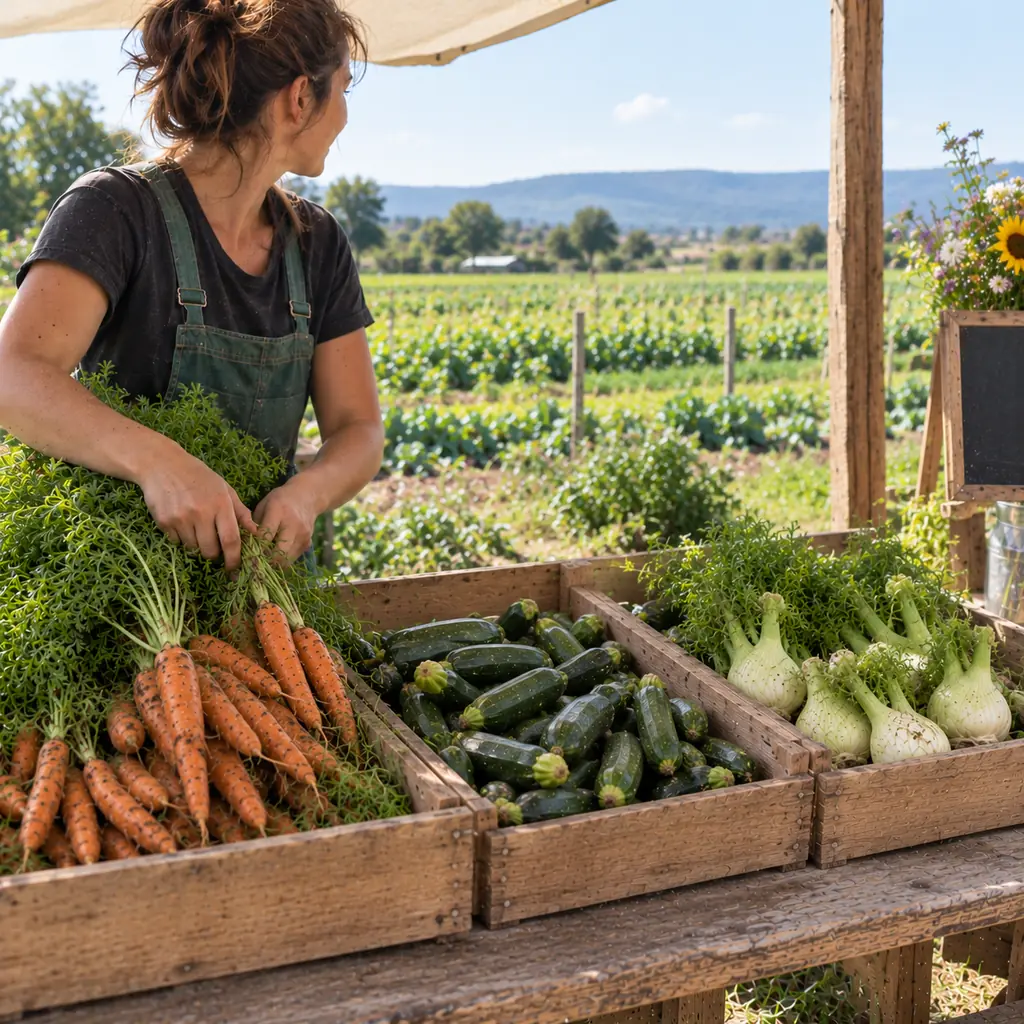
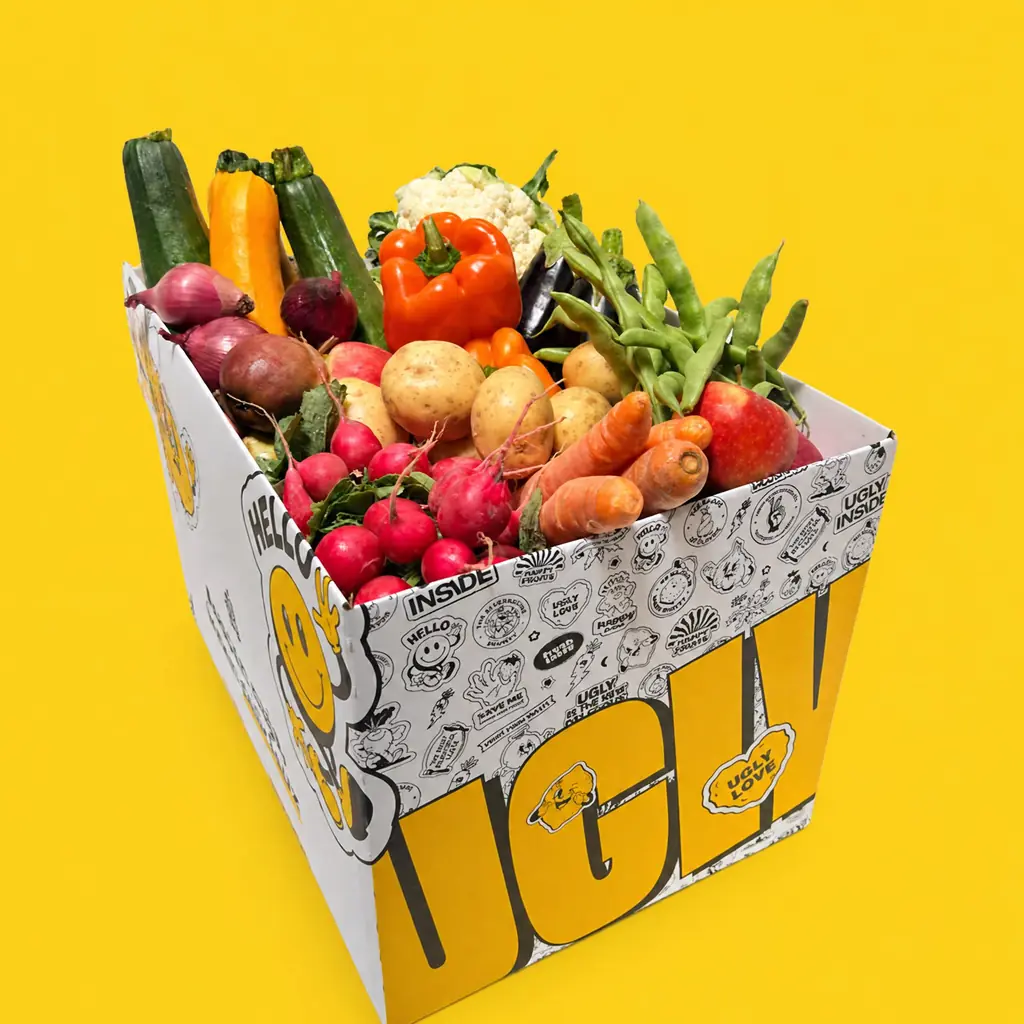
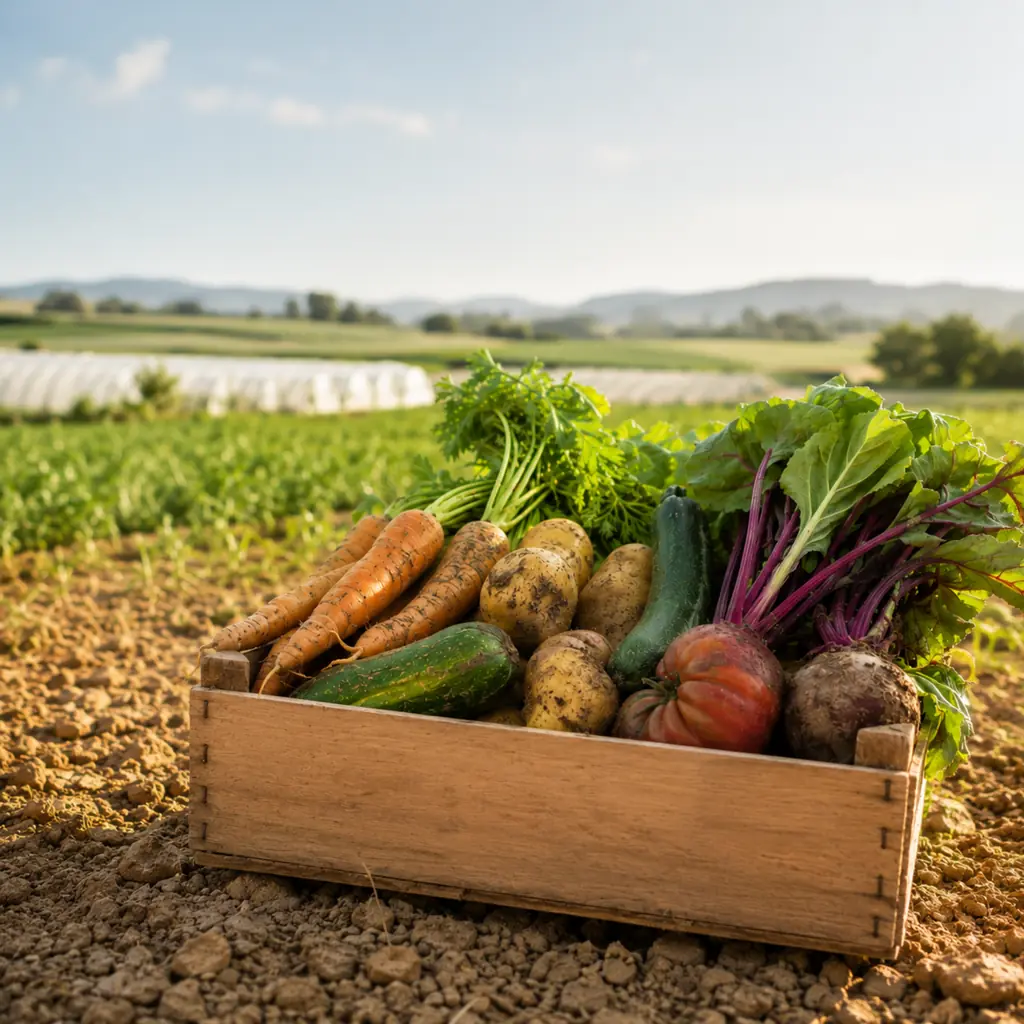
Field production requires virtually no infrastructure, but vegetables are exposed to the elements. Typical field vegetables include lettuces, beans, peas, cabbages, carrots, and onions (Swiss Farmers). These are precisely the vegetables — the ones you find week after week in your UglyFruits baskets — that are bearing the full brunt of this spring’s weather variations.
Lettuces, in particular, are extremely sensitive. When vegetation is ahead of schedule, vegetable growers also advance their sowing. If frost strikes, young plants can be destroyed, delaying the entire season by several weeks. It’s not a guaranteed disaster — but it’s a real uncertainty.
For longer-cycle crops — cabbages, leeks, celery, carrots — temperature variations create irregular growing conditions: rapid spurts during mild periods, followed by an abrupt slowdown during frost. These temperature swings don’t necessarily destroy the harvest, but they directly influence the shape, size, and appearance of vegetables.
Vegetables that are certainly more “ugly” than usual — and that’s good news!
When weather conditions are unstable, nature doesn’t produce perfectly uniform vegetables. A carrot subjected to hot-cold alternations will fork, twist, or grow in doubles. A cabbage whose growth has been disrupted might be smaller than the commercial standard, or slightly misshapen. These vegetables are biologically identical to their “calibrated” counterparts: same taste, same nutrients, same freshness. But they fail the aesthetic and dimensional criteria that large retailers have imposed for decades.
The result: these vegetables risk ending up directly in compost or, at best, in industrial processing channels. By welcoming them into UglyFruits baskets, you allow our partner producers to add value to a portion of their harvest that would otherwise be lost — even in an already difficult season.
That’s the strength of the food waste model: being useful precisely when nature is unpredictable.
Fluctuating availability: why some vegetables “disappear” from the basket
You may have noticed in recent weeks that some vegetables have been appearing less regularly in your baskets — or that they’ve appeared in more limited quantities than usual. This isn’t an oversight on our part, nor a logistical mystery.
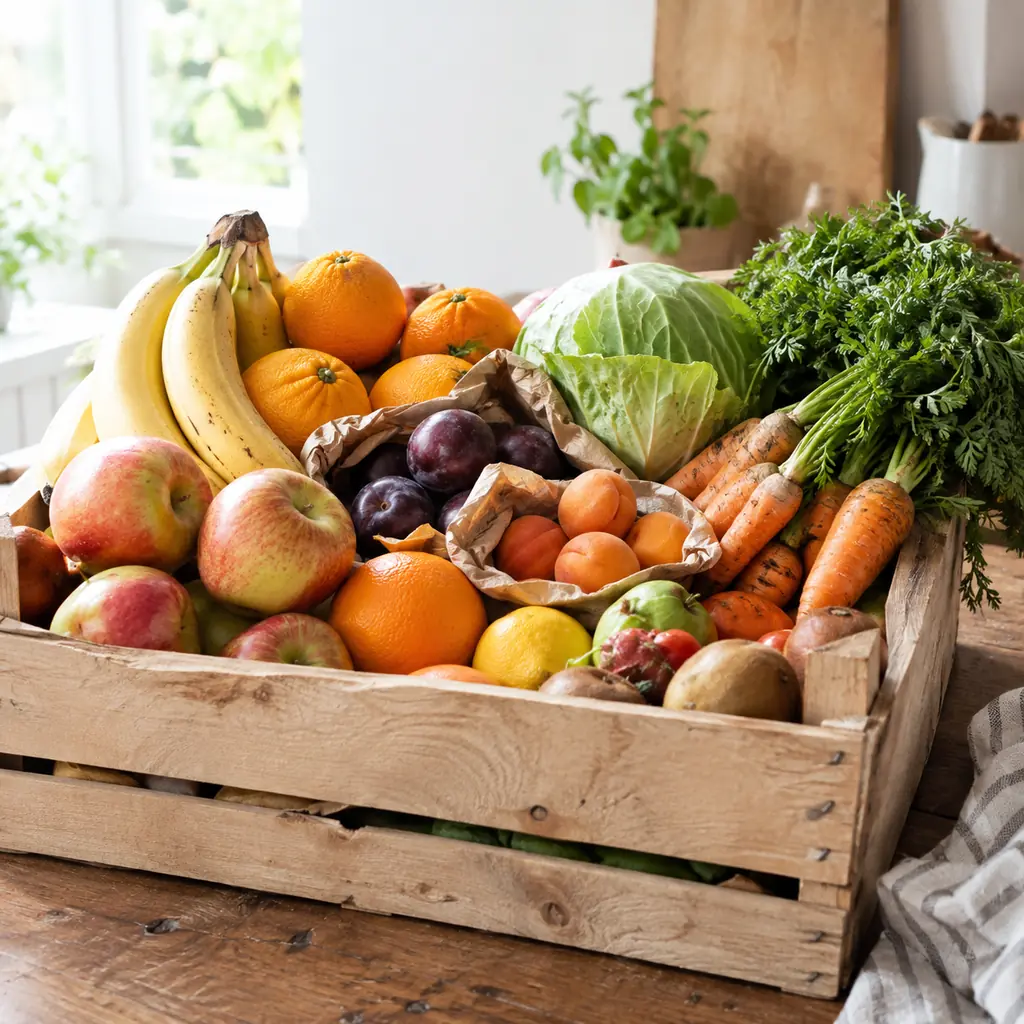
As we explained in our article about basket composition in winter, we buy vegetables the very morning of delivery, directly from our producers. This system guarantees maximum freshness — but it also means that if the harvest is limited that day, the available volume is too. We don’t stockpile, we don’t compensate with industrial volume: what the earth gives is what you receive.
In the context of this spring 2026, this translates into a few practical consequences:
Some field lettuces (batavia, butterhead, young shoots) may be temporarily less available, especially if frosts have affected recently sown plants.
Early season vegetables like spring onions or radishes may be delayed, or arrive in more irregular sizes than usual.
Storage products (carrots, beets, cabbages, potatoes) are less impacted in the short term, as they were harvested last autumn and put in reserve. These remain stable in your baskets.
And what about fruit? Fruit trees under surveillance
If vegetable growers are vigilant, Swiss fruit growers are frankly worried. The main problem lies in the very significant precocity of vegetation. After two full months of mild weather from mid-January, various plant species entered awakening particularly early. Some fruit trees are in bloom nearly a month ahead of schedule, while blossoms are particularly fragile and a frost that’s a bit too strong can cause their death, wiping out the future harvest (Météo Villes).
Valais apricot trees, cherry trees, but also apple and pear trees on the Swiss Plateau are affected. These are crops that partly supply our fruit baskets in summer and autumn. If the late March frosts did indeed cause damage to the blossoms, summer harvests could be reduced — and the available fruit even more “imperfect” than usual.
The flowering of fruit trees has already been advanced by 5 to 10 days between the last two climate reference periods. The temperature from February to April, which increased by 1.4°C between these same periods, had the greatest influence on the timing of spring development (MeteoSwiss). So this isn’t a one-off accident: it’s a structural trend linked to climate change, which is progressively redefining the Swiss agricultural calendar.
What all this says about the UglyFruits model — and why it makes sense
We could be tempted to see all this as bad news. Unpredictable weather, smaller vegetables, fluctuating availability — not exactly the ideal brochure for a delivery service.
But in reality, these unpredictable weather conditions illustrate exactly why UglyFruits’ food waste model is relevant — and even more relevant in difficult times than in normal times.
When the weather is perfect, vegetables are beautiful, regular, calibrated. Large retailers take more of them. Sorting is less strict. When the weather is difficult, pressure on producers increases: vegetables are less regular, and the risk of rejection increases exactly when producers least need to lose revenue.
By continuing to order your basket week after week — even when the composition changes, even when the vegetables are a bit more twisted than usual — you offer our partner producers a sales security that helps them weather the difficult seasons.
A vegetable that doesn’t meet size standards doesn’t have less taste or nutritional value. It’s just had a more adventurous season than the others!