7 days to reduce food waste
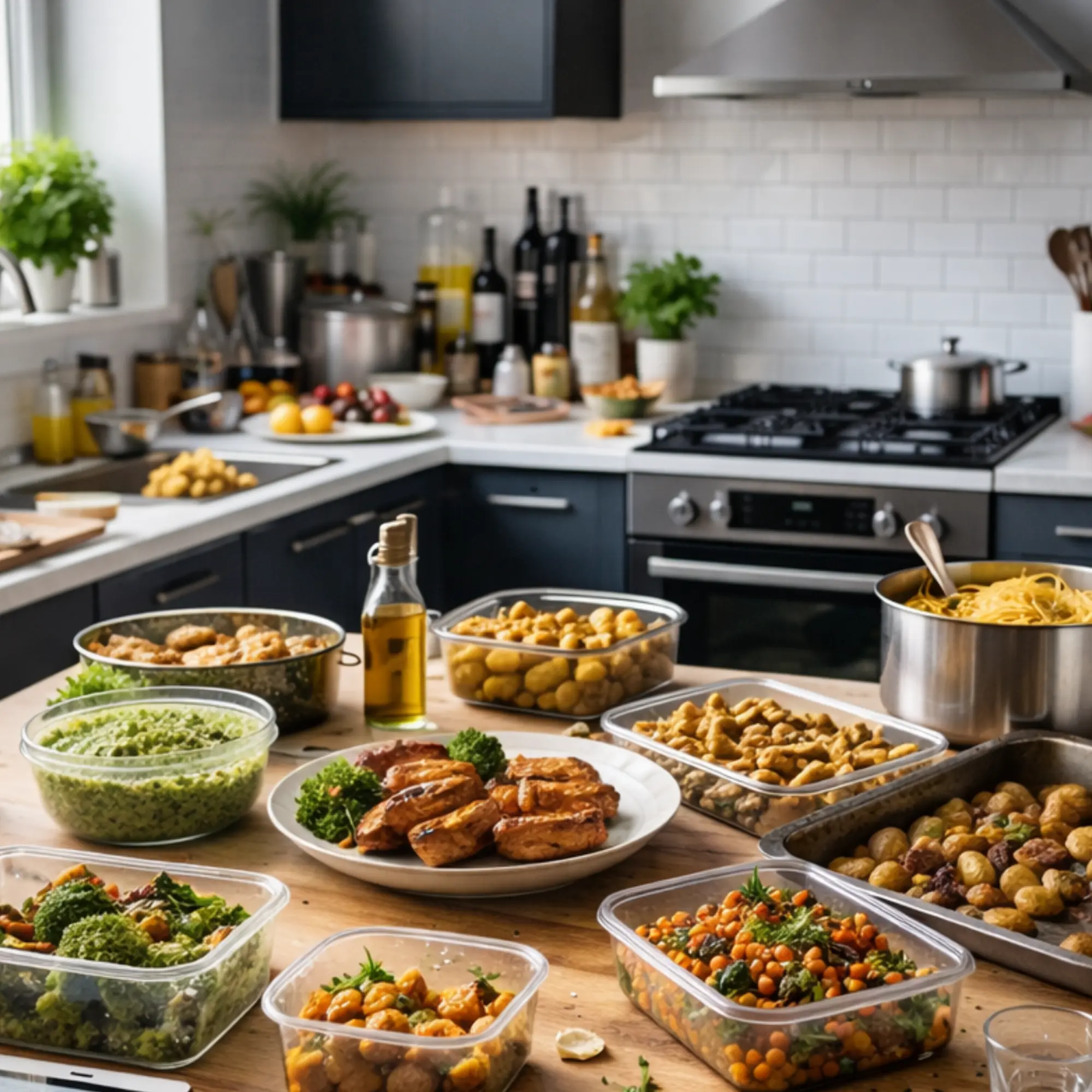
A saved vegetable is a vegetable eaten. It sounds simple because it is simple! A practical guide for a family of 4—no lectures, no guilt!
Every year, a Swiss family of 4 throws away an average of CHF 2,000 worth of food. Not out of bad intentions. Due to lack of organization, out of habit, sometimes from lack of ideas. This guide won’t explain why it’s a disaster—you already know that ;-)
It’ll just give you a concrete plan, day by day, to make a change. In 7 days. For real.
If we know one thing: waste starts with small habits that are easy to change. And it ends with a lot of satisfaction—and money in your pocket.
What these 7 days can change—in numbers
Meals thrown away
- Before the challenge: 3 to 5
- After 7 days: 0 to 1
Vegetables lost
- Before the challenge: ~30%
- After 7 days: < 5%
Budget wasted
- Before the challenge: ~CHF 40/week
- After 7 days: ~CHF 8/week
Kitchen stress
- Before the challenge: High
- After 7 days: Low
Day 1 — Monday, the honest inventory
What we do: we open the fridge and really look at what’s inside.
Monday is the day of truth. Before doing any shopping, open the fridge, the freezer, and the pantry, and write down what’s there—especially what’s starting to look tired. A slightly wilted carrot? A yogurt that’s almost finished? Pasta that’s been open for 3 weeks? It all counts.
The goal: plan the week’s menu based on what you already have. Not from an ideal shopping list. From the reality of your kitchen.
The fridge zone rule
Reorganize your fridge with simple logic:
• Top zone → what needs to be eaten first (leftovers, opened products)
• Middle zone → fresh vegetables and fruits for the week
• Bottom zone → meats, fish, dairy products
• Door → condiments, drinks, eggs
Tip: Take a photo of your fridge before each shopping trip. In 10 seconds, you’ll know exactly what you have—and you’ll avoid buying that 3rd jar of mustard “just in case.”
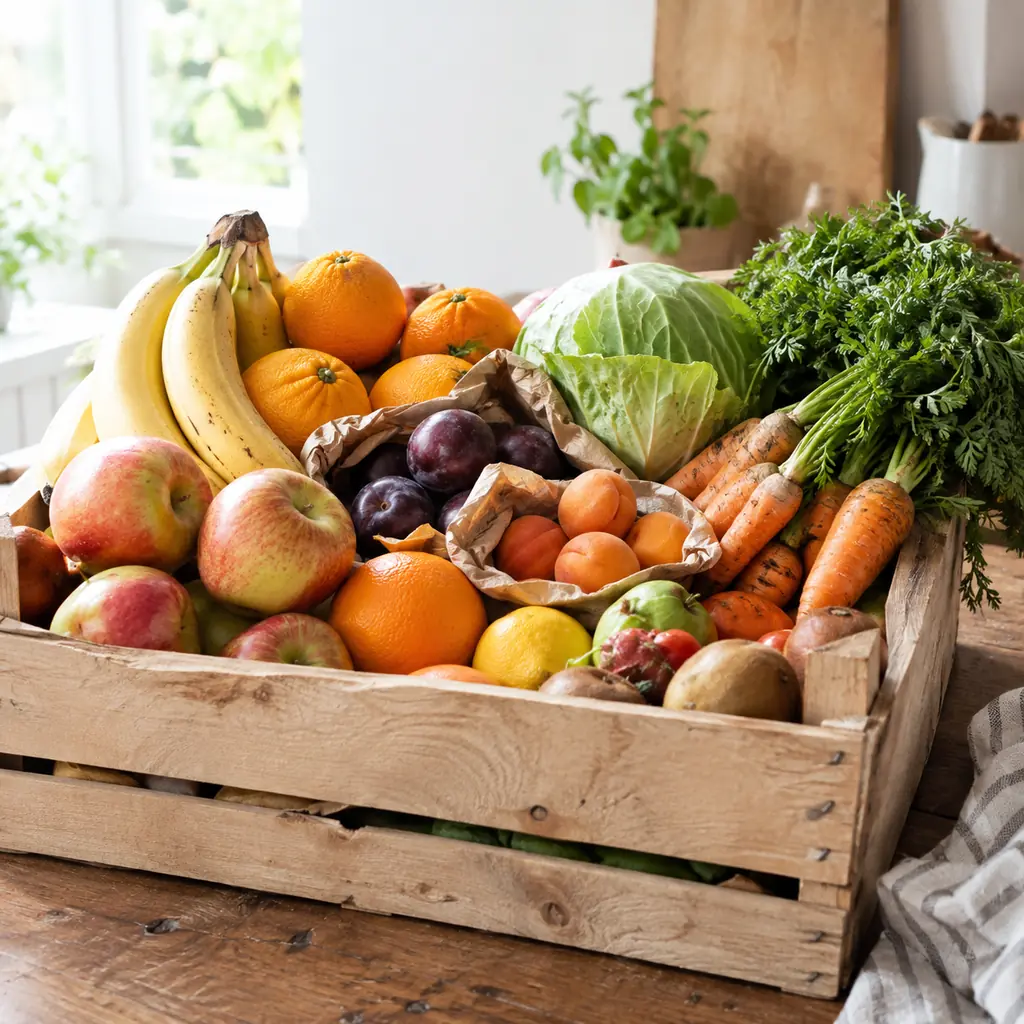
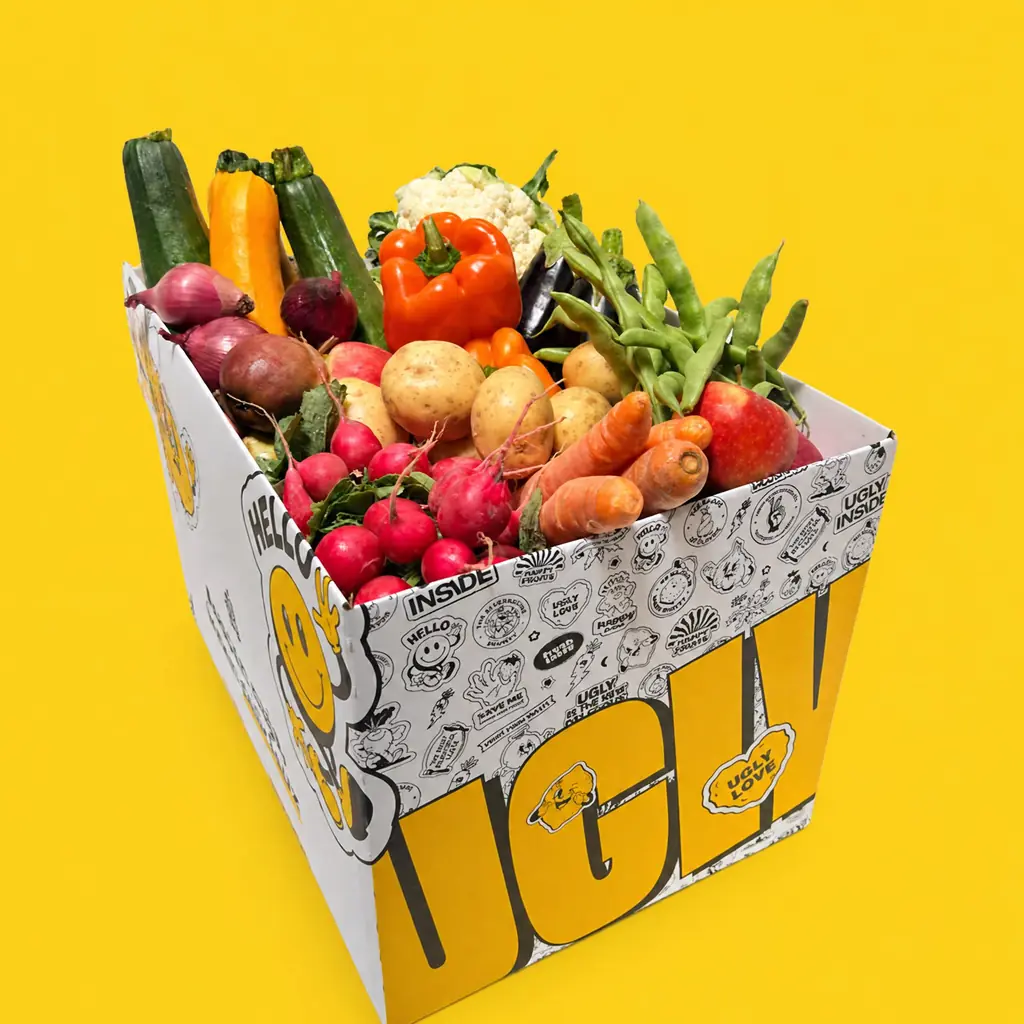
The UglyFruits tip: Our baskets change every week based on the harvests. It’s exactly this principle applied on a large scale: cooking what’s there, not what we fantasize about having.
Day 2 — Tuesday, the surgical shopping list
What we do: we buy less, but better. Armed with your Monday inventory, write a precise shopping list. The golden rule: each product purchased must have a defined role in at least one meal of the week. No more “just in case” purchases and promotions on products we never have time to cook.
The 3-column method
Divide your list into 3 categories:
• ? Urgent: to cook within the first 2 days (fragile products, leafy greens, herbs)
• ? This week: root vegetables, eggs, cheeses—last 5 to 7 days
• ? Long term: legumes, canned goods, grains—last several weeks
Budget tip: Imperfect fruits and vegetables cost on average 20 to 30% less than their perfectly calibrated supermarket equivalents—for exactly the same taste. Your taste buds can’t tell the difference. Your wallet can.
The UglyFruits tip: Our baskets are put together each week based on available harvests. Result: you automatically cook seasonally—without thinking about it, and without overpaying.
Day 3 — Wednesday, the big cook
What we do: we cook double, we save time all week.
Wednesday evening is the ideal time for the big weekly cook—the kids are home, we have a bit more time. The idea: prepare bases that will serve for multiple meals.
The 4 anti-waste bases to prepare in one evening
• A big pot of grains (rice, quinoa, spelt) → will serve as a base for 2 to 3 different meals
• A homemade vegetable broth with peels and tops → to use for soups and risottos
• A generous tomato sauce → pasta, gratin, quick curry base
• All the vegetables that are starting to soften → roasted in the oven with olive oil and salt, they keep for 5 days
The “batch cooking” principle: Cook once, eat three times. 2 hours on Wednesday easily saves 4 hours of cooking the rest of the week—and avoids those guilty Friday night pizza orders.
Day 4 — Thursday, the art of the leftover meal (and that’s perfectly fine)
What we do: we transform leftovers into real meals—not punishment. On Thursday, we empty the fridge with style. Leftovers aren’t condemned—they’re ingredients. Yesterday’s rice becomes fried rice tonight. A bit of leftover soup becomes the base of a creamy pasta sauce. Wednesday’s roasted vegetables become a tart or frittata.
3 foolproof “fridge-clearing” recipes for 4 people
•Giant frittata: all cooked vegetables + 6 eggs + grated cheese → in the oven 20 min at 180°C. Complete meal.
•Fried rice: yesterday’s rice + eggs + vegetables + soy sauce + garlic. Ready in 10 minutes.
•“Fridge bottom” soup: everything that’s lying around + broth + herbs. Blended or not depending on your mood.
The leftover rule: Leftovers should be eaten within 3 days maximum. After that, they go straight to the freezer—not the trash. The freezer is your best anti-waste ally: always label with the contents AND the date.
The UglyFruits tip: People often say organic is expensive. But an organic vegetable you eat always costs less than a conventional vegetable you throw away.
Day 5 — Friday, the freezer, that misunderstood friend
What we do: we freeze strategically before things go bad. On Friday, before the weekend when eating habits become more unpredictable, it’s the right time to check the fridge and decide what to freeze. Bread that’s drying out, fresh herbs, overripe bananas, leftover sauce, meat bought in bulk—all of this can be frozen.
What freezes (and what we often forget)
• ✅ Sliced bread → straight into the toaster from frozen
• ✅ Fresh herbs → chopped in ice cube trays with olive oil
• ✅ Overripe bananas → whole or in pieces → perfect for smoothies and cakes
• ✅ Lemon juice → in ice cubes, ideal for recipes that need just a splash
• ✅ Parmesan → grated, in a bag → grates directly from frozen
• ✅ Overripe tomatoes → whole, to take out in winter for sauces
• ❌ Lettuce, cucumber, radishes, sour cream → don’t survive freezing
The golden rule: Everything that goes into the freezer must be labeled: name + date. A mysterious container frozen for 8 months is a waste risk turned into a certainty.
The UglyFruits tip: The overripe fruits from our baskets make the best smoothies, the best compotes, and the best cakes. The riper a fruit, the sweeter it is. It’s as simple as that.
Day 6 — Saturday, creative cooking (the day we have fun)
What we do: we finish off the pantry with imagination.
Saturday is the day when kids can participate, when we take our time, when we try things.
It’s also the perfect time to audit your pantry: the lentils bought 6 months ago, the half-opened cashews, the can of coconut milk that’s been sitting there.
The “pantry challenge” principle Ask the kids to randomly choose 3 ingredients from the pantry and imagine together what you can make with them. It’s not a constraint game—it’s culinary creativity disguised as a game. And often, the result is surprising.
Some combinations that seem crazy but work
• Rice + coconut milk + frozen banana → express tropical rice pudding
• Lentils + wilting spinach + cumin → quick Indian dal
• Oats + overripe pear + cinnamon → crumble in 15 minutes
• Last bit of tahini + lemon + garlic + cold water → sauce for everything
For the kids: Involving kids in anti-waste cooking is the best way to create lasting habits—without a single lecture. When they “invent” the meal themselves, they eat it.
The UglyFruits tip: We sometimes receive messages from customers surprised to find a vegetable they don’t know in their basket. That’s intentional. Discovery is the opposite of waste from boredom.
Day 7 — Sunday, the review and new habits
What we do: we look at what we’ve accomplished, we adjust, we continue.
On Sunday evening, take 5 minutes to review the week. It’s not an exam—it’s just a compass.
What worked well?
What got thrown away anyway?
What can we adjust next week?
The 5 questions for the weekly review
• How many meals were prepared from leftovers? (goal: at least 2)
• What was thrown away, and why? (bought too much? poor storage?)
• Are there products that systematically end up in the trash? (maybe stop buying them)
• Is the fridge better organized than at the beginning of the week?
• What meal are we most proud of this week?
The real goal: The aim isn’t to achieve zero waste from the first week. It’s to create 3 or 4 new habits that become automatic. The rest follows naturally.
What’s next?
These 7 days aren’t a challenge to complete and forget. They’re 7 new habits to integrate one by one, according to what works for your family. No pressure, no perfection. Just a bit more awareness—and a lot fewer regrets standing in front of a fridge to empty on Monday night. And if you want to give yourself every chance of success: an UglyFruits basket delivers every week or every two weeks, exactly the right amount of fresh, seasonal, organic vegetables and fruits—often a bit wonky. The kind of produce that makes you cook, discover, and improvise. Without having to think about it ;-)