Essential autumn squash varieties from UglyFruits: types and storage
These generous and flavorful vegetables deserve a special place in our kitchens. Discover four essential varieties and our best tips for storing them.
The 4 squash varieties to discover
Red Kuri Squash (Potimarron)
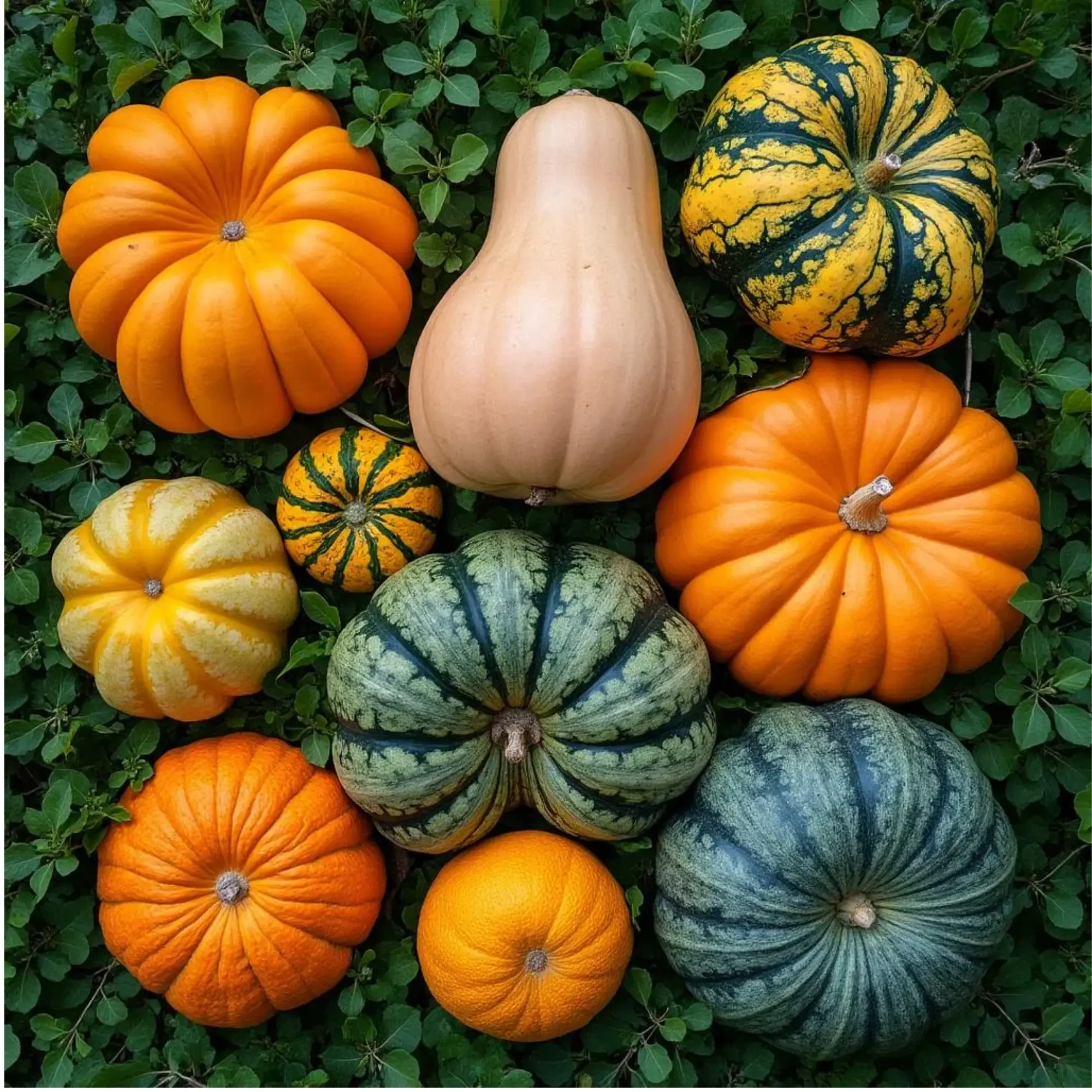
Recognizable by its teardrop shape and beautiful red-orange color, red kuri squash is one of the most beloved squash varieties. Its dense, sweet flesh has a delicious chestnut flavor. No need to peel it: its thin skin is perfectly edible once cooked! Perfect for creamy soups, gratins, or even roasted in the oven in wedges.
Average weight: 2 to 7 lbs
Butternut Squash With its characteristic elongated “bottle” shape and beige-orange color, butternut is a kitchen staple. Its firm, low-fiber, and slightly buttery flesh (hence the name!) makes it perfect for purees, creamy soups, or gratins. Its bulbous end contains the seeds, while the “neck” offers generous flesh. Average weight: 2 to 4 lbs
Kabocha Squash
Originating from Japan, kabocha stands out with its round, flattened shape and dark green skin sometimes streaked with gray. Its yellow-orange flesh is particularly sweet, almost sugary, with a dense texture reminiscent of sweet potato. Excellent roasted in the oven, in tempura, or in curries and braised dishes. Like red kuri squash, its skin is edible once cooked.
Average weight: 3 to 7 lbs
Delicata Squash
Smaller and more elegant, delicata sports a cream-colored skin striped with green. It’s the “express” squash par excellence: its tender flesh cooks quickly and its thin skin is completely edible. Its delicate taste, lightly sweet with notes of sweet corn, makes it perfect for beginners. Simply sliced into rings and roasted, it’s delicious!
Average weight: 10 oz to 2 lbs
Winter squash are storage champions!
Ideal conditions
- Temperature: 50-59°F (a cellar, unheated garage, or pantry)
- Humidity: 50-70% (avoid excessive moisture)
- Light: Away from direct light
- Ventilation: In a well-ventilated area
Storage duration
- Butternut: 3 to 6 months (the champion!)
- Kabocha: 3 to 5 months
- Red Kuri: 3 to 4 months
- Delicata: 2 to 3 months (more fragile)
Practical tips
✓ Don’t wash your squash before storing
✓ Keep them with their stem attached
✓ Arrange them so they don’t touch each other
✓ Check them regularly to remove any that are spoiling
✓ Imperfect squash with small cosmetic flaws store just as well as perfect ones!
Storing cut squash
Once opened, squash requires more attention:
-
In the refrigerator (raw) Duration: 4 to 5 days
Method:
Remove seeds and stringy pulp.
Wrap tightly in plastic wrap or store in an airtight container.
Place in the vegetable crisper.
Cut away any browning parts if necessary -
In the freezer
Duration: 10 to 12 months
Raw method:
Peel and cut into cubes
Arrange on a baking sheet in a single layer
Freeze for 2 hours then transfer to a freezer bag
Label with the date
Cooked method:
Cook the squash (steam, oven, boiling water)
Puree or keep in pieces
Freeze in appropriate portions
Signs that squash is good or no longer good
❌ Don’t consume if:
- Mold is present
- Unpleasant or sour odor
- Soft or slimy texture
- Significant brown or black areas
✅ No problem if:
- Small surface spots (just cut them off)
- Irregular shape or uneven color
- Small scars on the skin
Enjoy your squash tasting and happy cooking!