Don't toss your cooking water: you need to keep your spirits up... and everything else too!
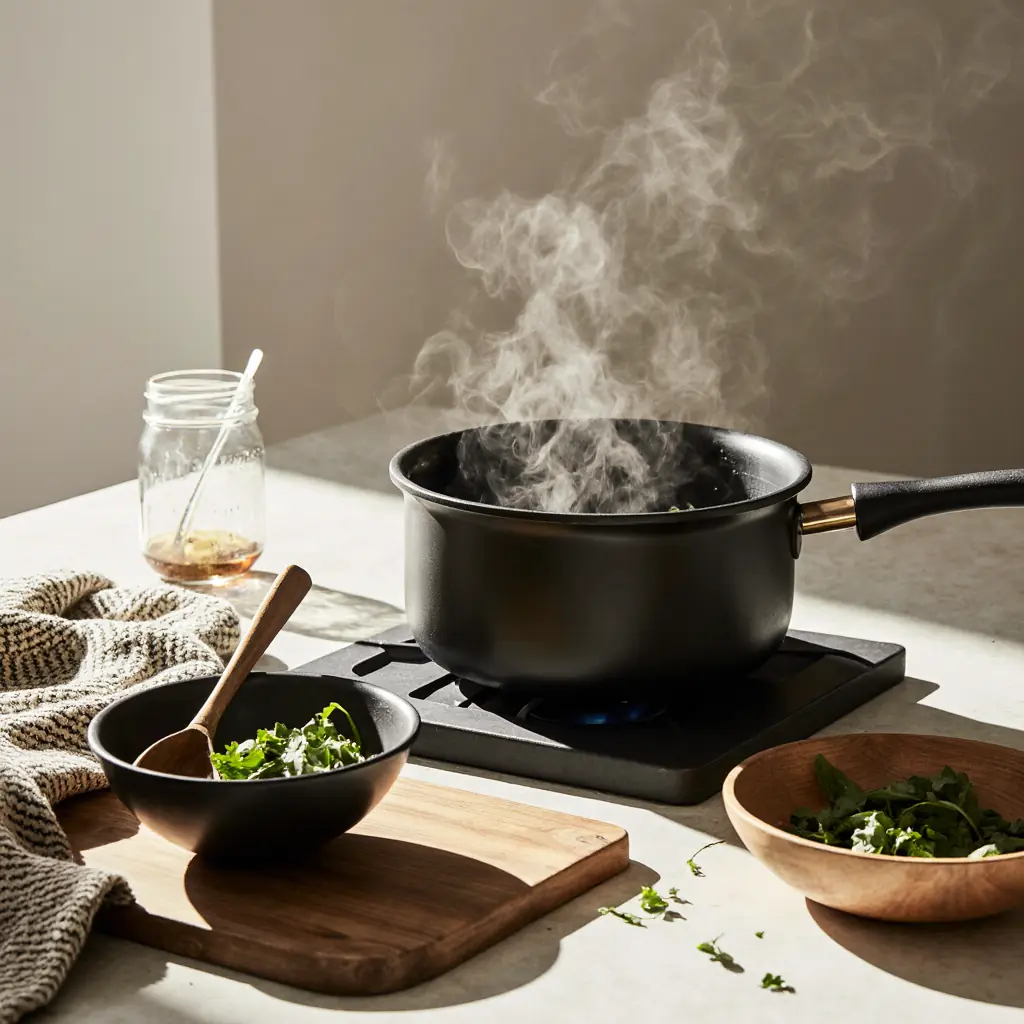
Spotlight on a well-kept secret: the cooking water from your vegetables is a real ally for your kitchen and garden!
The nutritional benefits of cooking water
When you cook your vegetables, some of their vitamins and minerals seep into the water. This water then becomes a concentrate of nutrients: potassium, magnesium, B vitamins… Rather than watching them disappear down the drain, let’s reuse them smartly!
What to do with which cooking water?
Potato cooking water is perfect for cleaning silverware and making your pots and pans shine. It also makes an excellent base for your soups and purees. That’s what we call killing two birds with one stone… or getting a thousand benefits from one spud!
Green vegetable cooking water (spinach, green beans, broccoli) is ideal for watering your houseplants once cooled. Rich in chlorophyll and minerals, it gives them a real nutritional boost.
Root vegetable cooking water (carrots, turnips, beets) transforms into a flavorful broth for your risottos or as a sauce base. Its richness in natural sugars brings subtle sweetness to your dishes. Enough to keep your spirits up!
Leafy vegetable cooking water (cabbage, spinach) can serve as a final rinse for your hair, bringing shine and softness thanks to the minerals it contains.
Our practical tips
Store your cooking water in the refrigerator for up to 3 days in glass jars. You can also freeze them in ice cube trays for later use in cooking.
Be careful though: only use cooking water from organic, unsalted vegetables for watering your plants. Otherwise, they might not be too happy!
As you can see, every vegetable has its value, even the water it was cooked in! Let’s transform our habits together for more responsible and creative cooking.