Grown by the Abt family, who have run Rütihof farm in Aargau for five generations, these organic sweet potatoes didn't win any beauty contest!
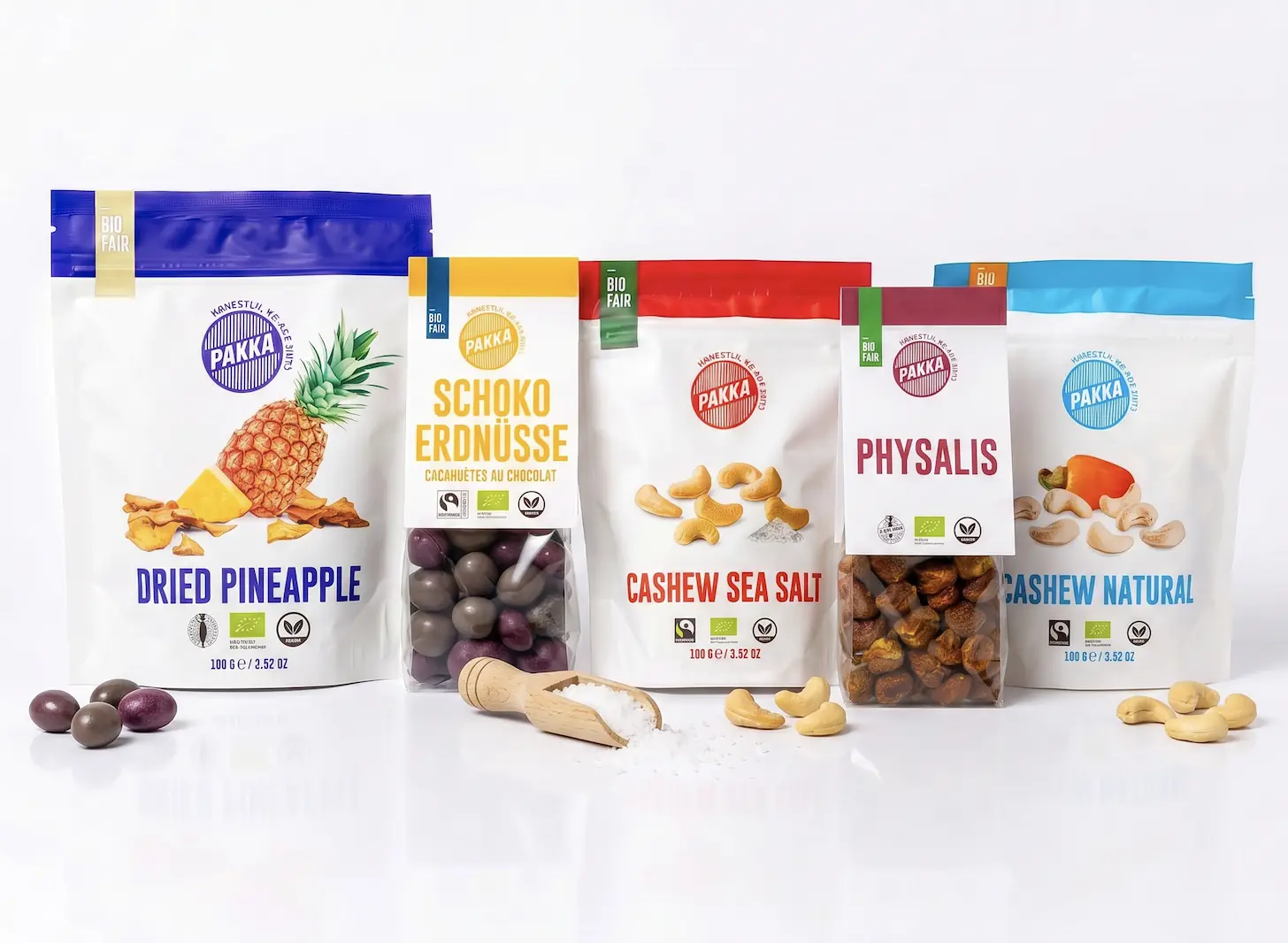
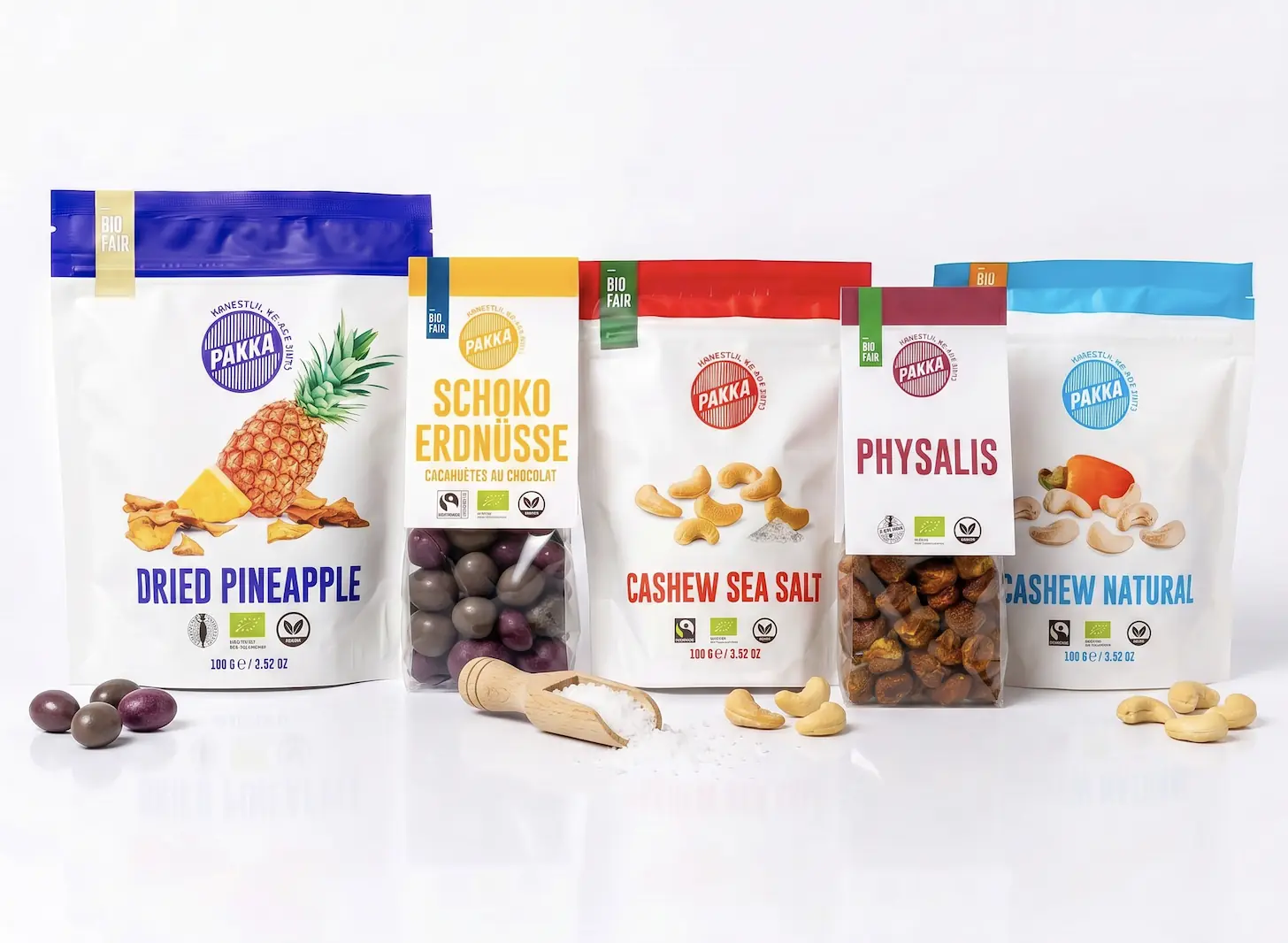
A date that’s approaching a little too fast, and a whole batch could end up in the trash. The product’s perfectly fine, but the date is too short for traditional distribution networks. We buy the batch, save the brand from a total loss, and offer it to our community at a sweet price. That’s what flash offers are all about.
Behind every Pakka bag, there’s a 100% organic cooperative in Peru, Burkina Faso, or Colombia. Letting the batch go means throwing all that hard work away. No way!
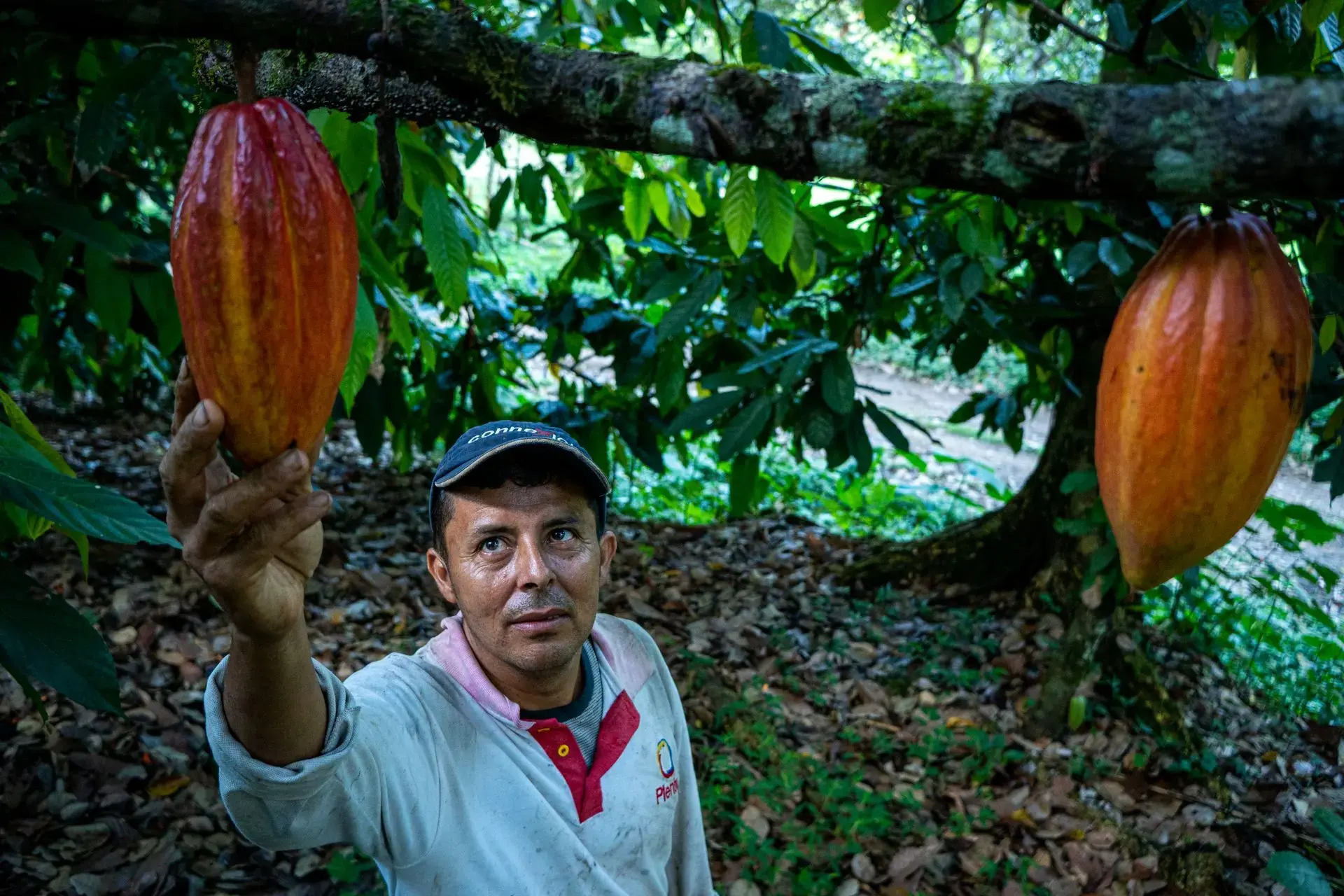
It all started in 2005, in Zurich. Three partners made an observation: in the cacao and dried fruit trade, producers get crumbs while middlemen take the lion’s share. They decided to flip the supply chain: start from the source, process locally, and sell only organic and fair trade.
Flipping the supply chain
Back then, Colombian cacao was shipped as raw beans to Europe, and African cashews took a detour through Asia to be shelled. Producers pocketed just 5 to 10% of the final price.
Pakka flips that: in Colombia, the company co-founded Equiori, the first integrated organic chocolate factory in a producing country. In Burkina Faso, cashews are hand-shelled on-site. In Peru, fruits are dried where they grow.
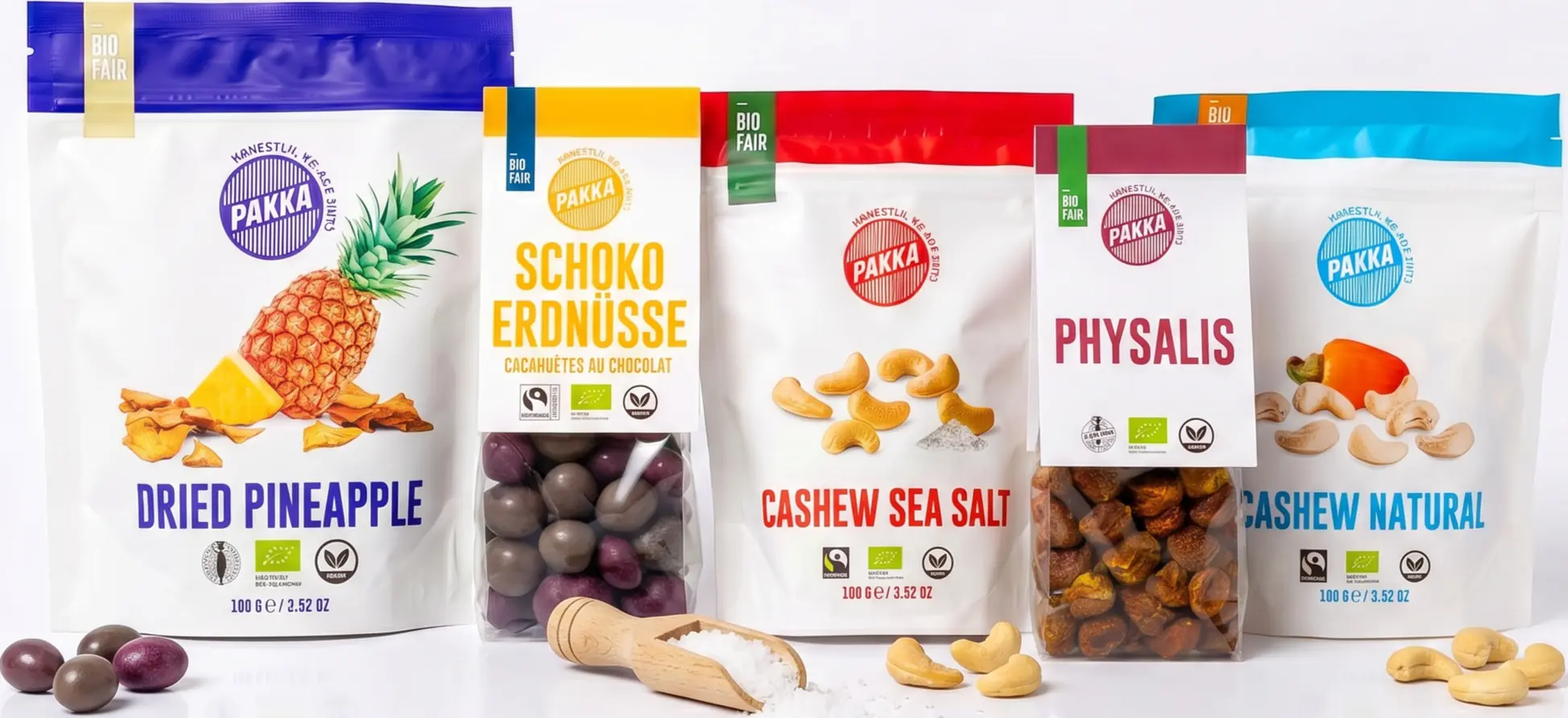
One-time delivery, outside Uglyfruits subscription
Away from light, in a dry spot, at room temperature — a cupboard works just fine. Once the bag is open, transfer to a jar: fruits stay soft, nuts stay crunchy, and chocolate stays melt-in-your-mouth.
Grown organically by small family farms in Nariño, in southwestern Colombia. A cooperative of 14 members supports 95 families who cultivate 24.5 hectares together organically.
The berries are hand-picked at full ripeness, washed, and dried on-site at Fruandes, their partner in Ibagué.
Taste and uses
No sugar, no sulfur, no additives. The result: soft, juicy flesh with a flavor somewhere between mango, apricot, and lemon. They’re perfect as a grab-and-go snack, for a fruity touch in muesli, or for making homemade energy bars!
Direct trade
Dried in the country of origin, allowing producers to capture a real share of the value.
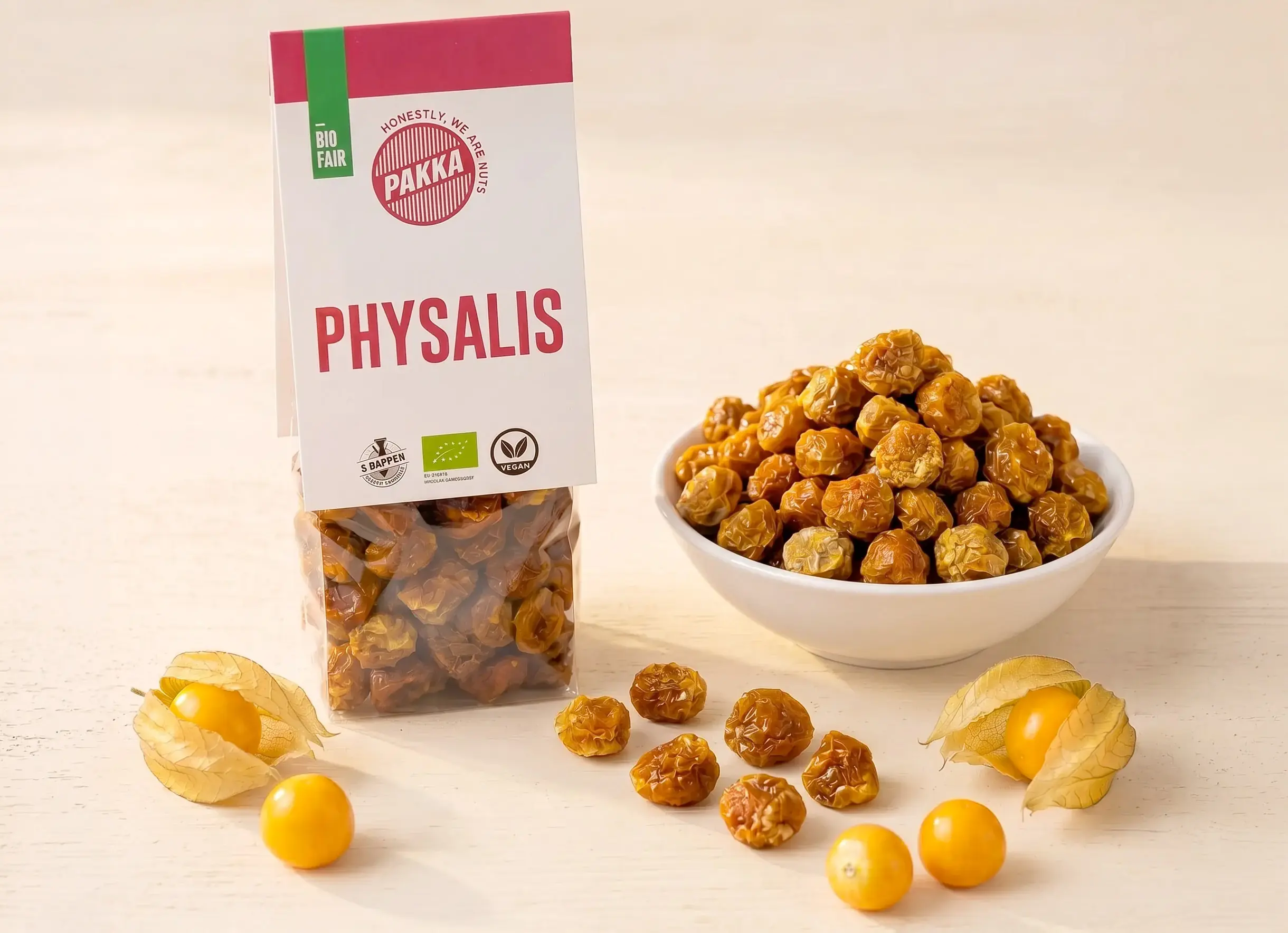
Grown in the fertile Tarma Valley, in central Peru, between the snow-capped Andes peaks and the Amazon.
Taste and uses
The contrasting climate and intense sunshine give these pineapples a particularly pronounced aroma. The dried pieces are perfect as a healthy grab-and-go snack.
Direct trade
Pakka works with Greenbox, a company founded in 2011 where 65% of the workforce is women. The fruits are harvested ripe, gently dried, and packaged on-site — the entire chain stays in Peru, from cultivation to packaging.
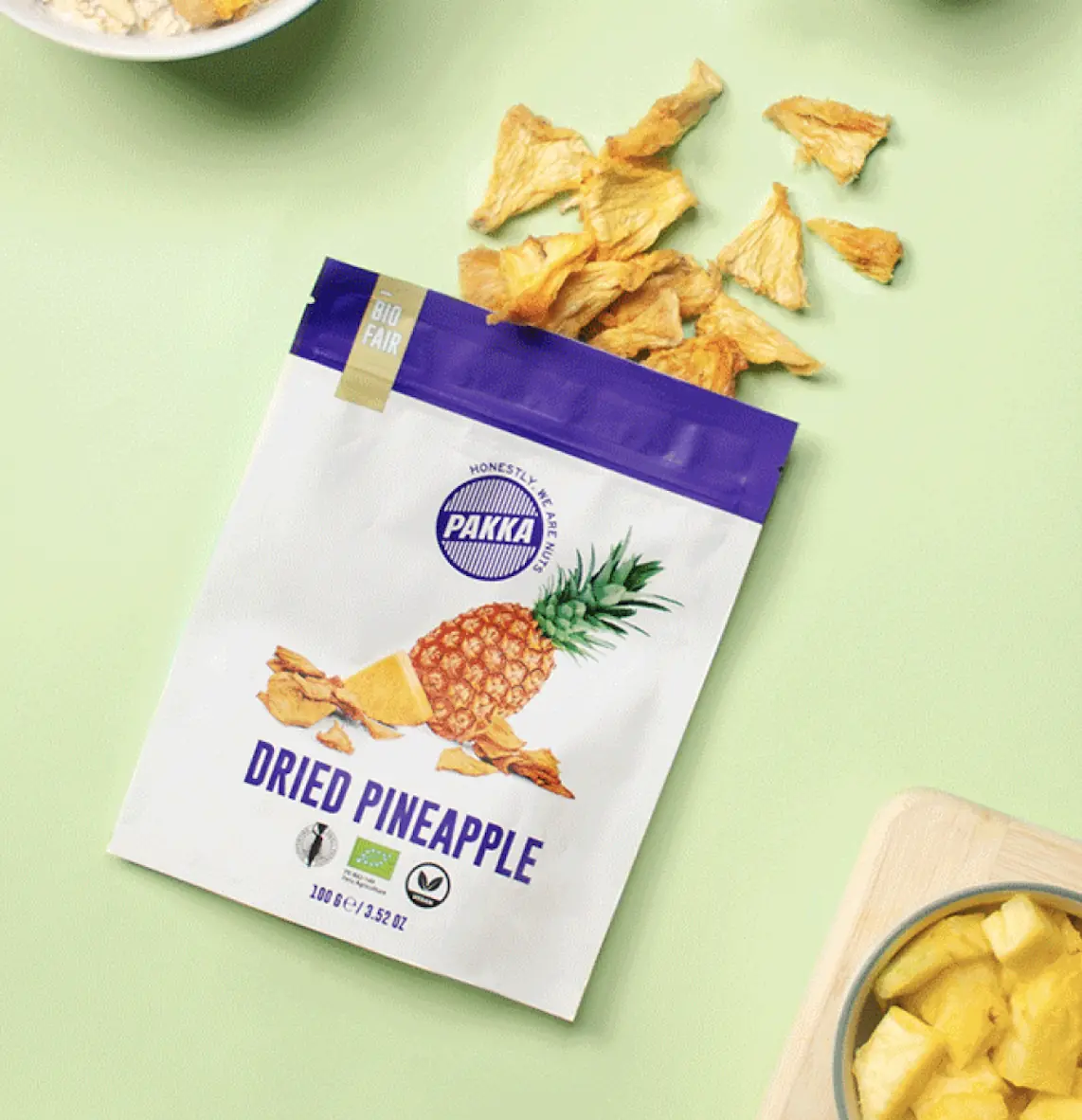
From small producer cooperatives around Bobo Dioulasso, in Burkina Faso. About 2,000 farming families make their living from this supply chain.
Taste and uses
Crunchy texture, mild and buttery taste. Ideal as a healthy snack or as a topping for bowls, salads, and Asian-inspired dishes.
Direct trade
The local partner shells everything by hand on-site, under protected working conditions (the shell contains a corrosive acid). Once vacuum-sealed, the nuts travel by ship to Hamburg, where they’re packaged.
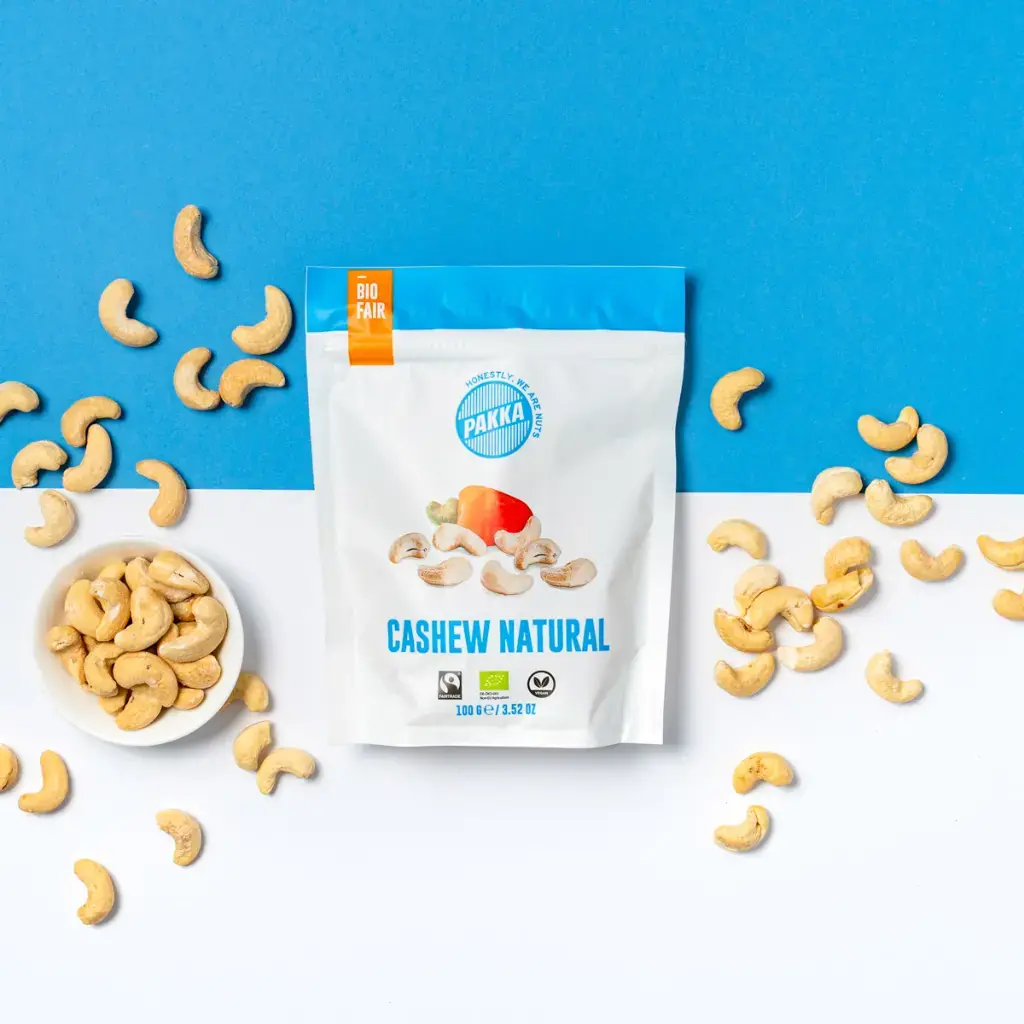
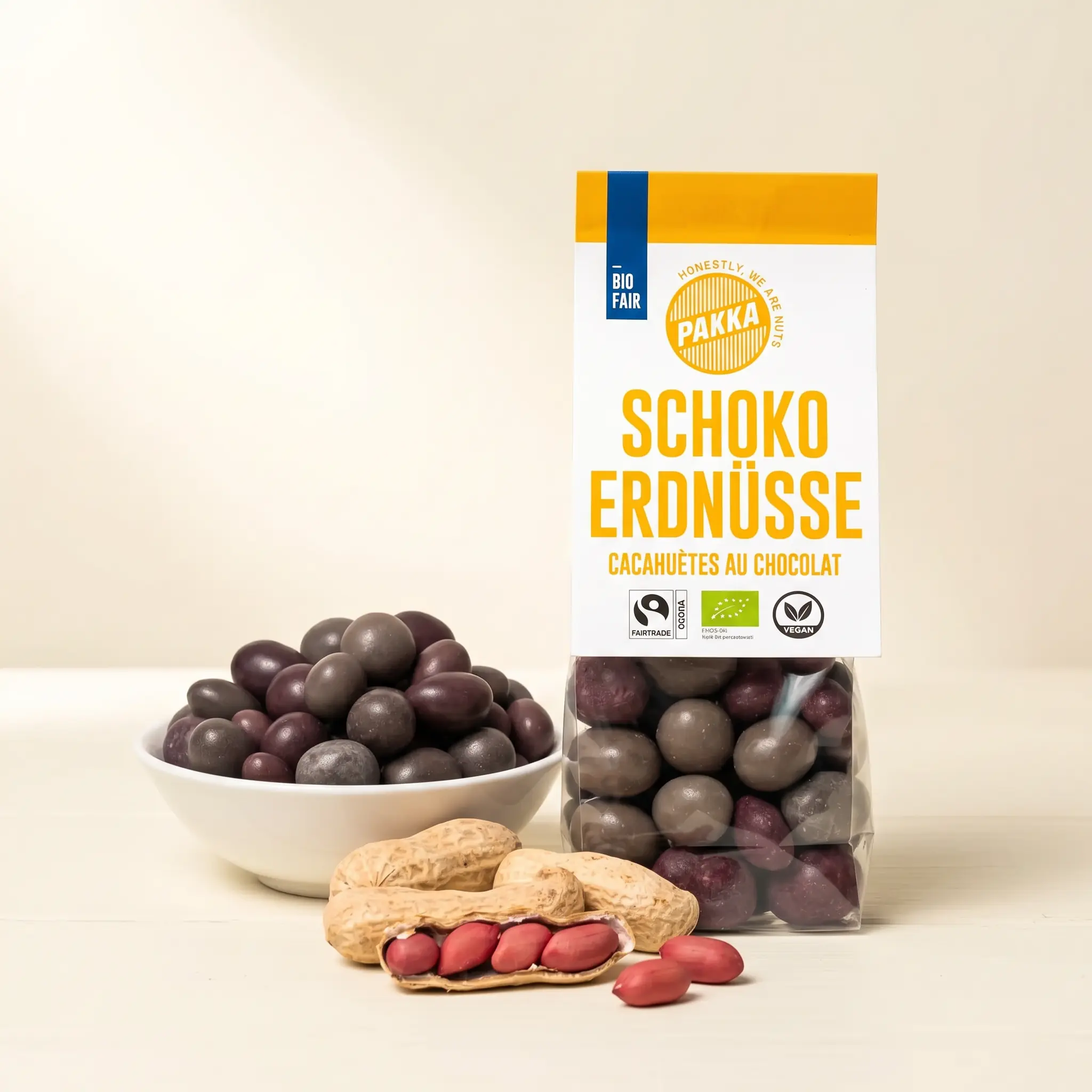
Pakka’s organic peanuts, the first of their kind certified organic in Colombia, are hand-grown by small producers in the Andes.
Taste and uses
A thin sugary layer finishes them off. Round, slightly nutty taste, and that crunch that makes the bag hard to put down.
Direct trade
They’re coated with Equiori dark chocolate, Pakka’s sister chocolate factory based in Colombia, which works with the APROCALG, ASOPEP, and ASOAGRICAC cooperatives for cacao.
Ingredients: cane sugar 40%, cacao 33% (cacao paste, cacao butter), peanuts 26%, fruit and vegetable juice 1%. 100% organic, vegan. Allergens: peanuts. May contain traces of cashews and almonds.
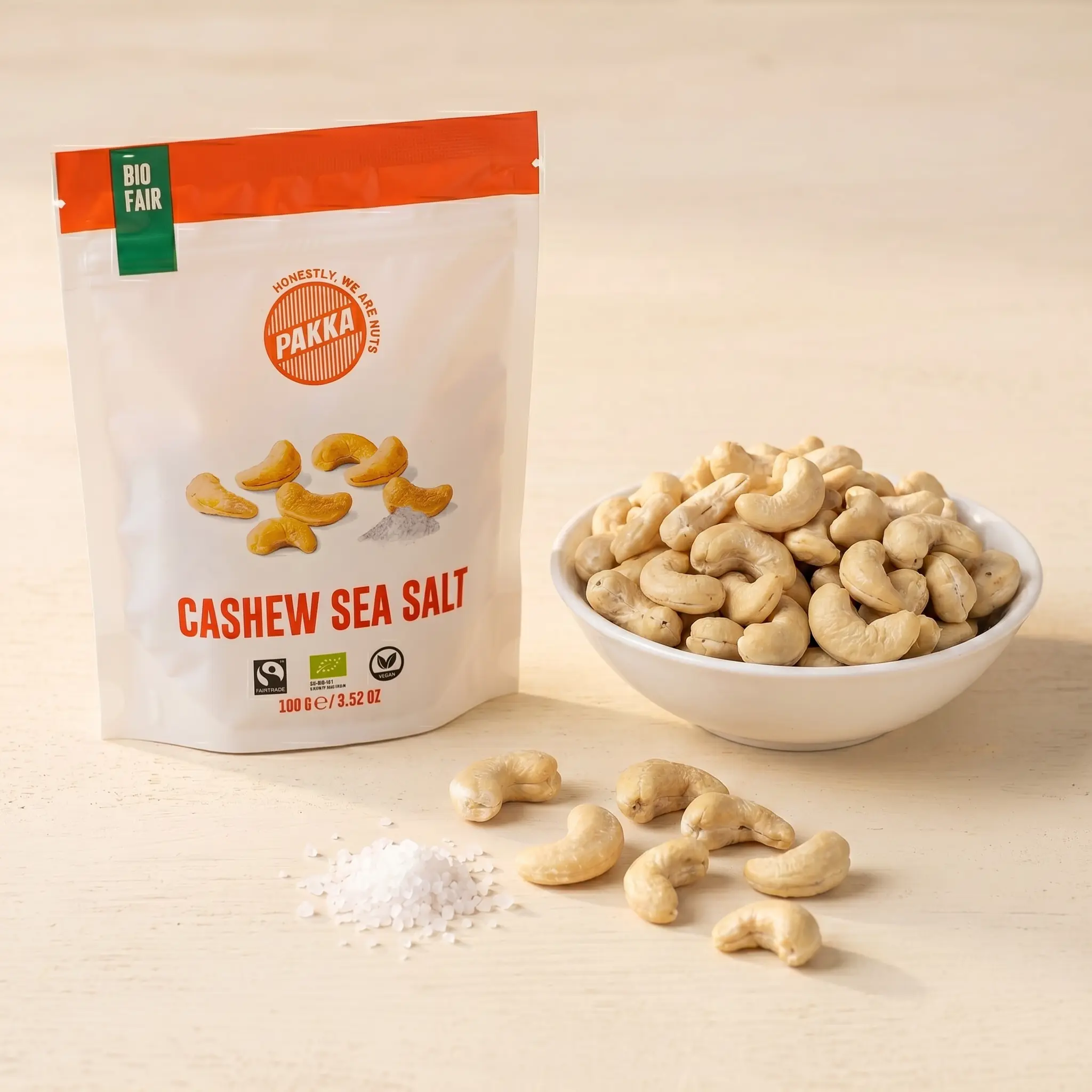
Same origin as the natural ones: gebana Burkina Faso, around Bobo Dioulasso, 2,000 farming families behind every bag.
Taste and uses
Roasting brings out their buttery side, while the salt enhances without overpowering. Perfect for aperitifs, but also crushed on a lentil curry or butternut squash soup.
Direct trade
Hand-shelled on-site, shipped by boat to Hamburg, where they’re gently roasted without oil and delicately salted.
Oh no, it's already sold out
The next flash offer is coming very soon.
Subscribe to the newsletter to be the first in line!