
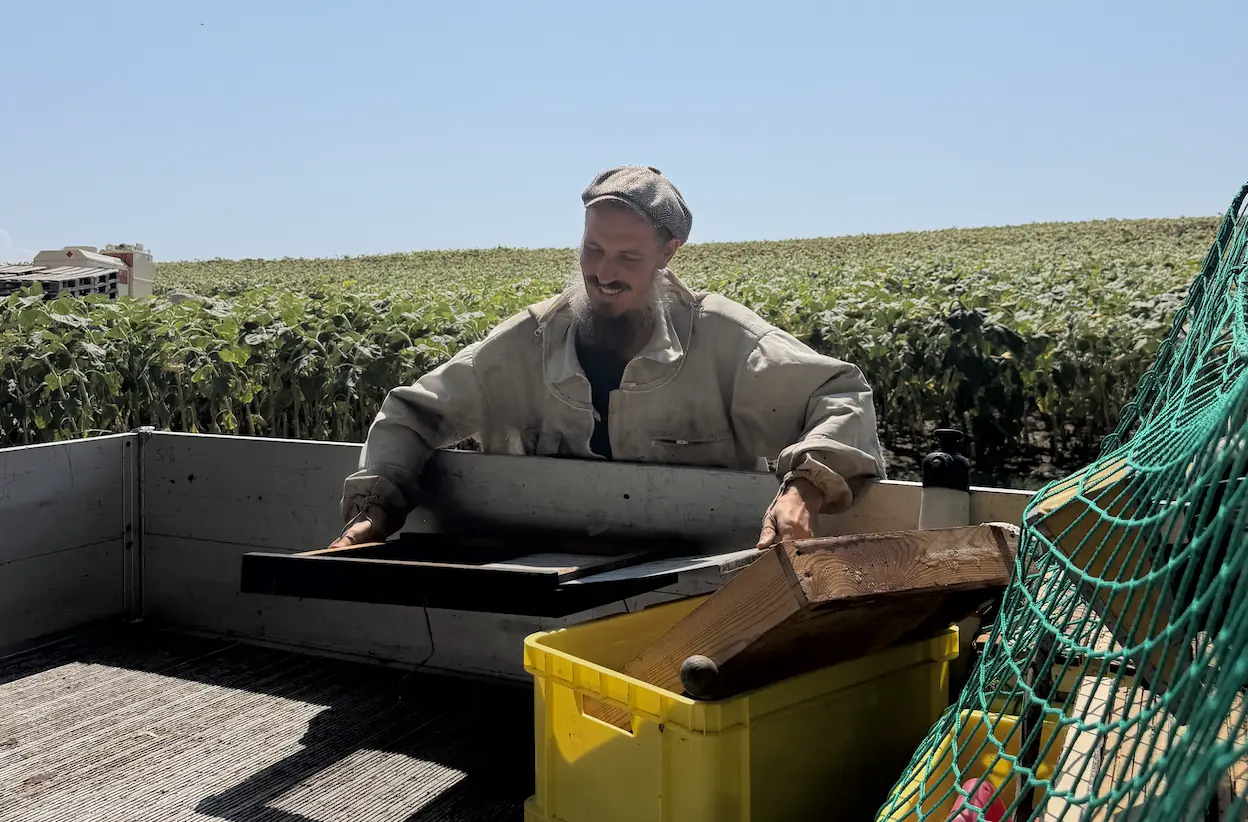
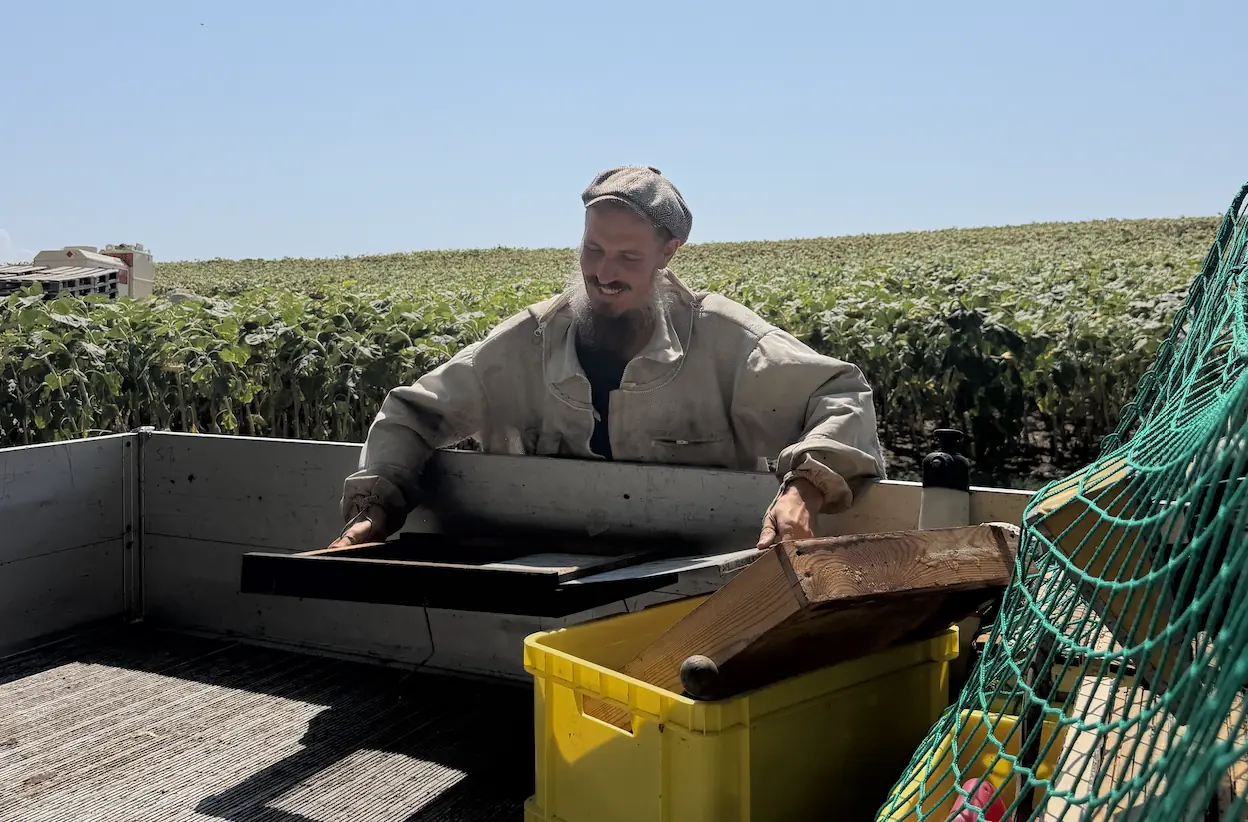
This scorching summer should’ve worked against the bees: above 35°C, flowers stop producing nectar, and colonies reassign some of their workers to cooling the hive instead of foraging. Pretty much everywhere, honey production dropped this year.
But at Le Talus, things didn’t go as expected at all. New hives installed this year, a location that held up well against the heat, and there you have it—a harvest way above what Thomas had planned to sell.
This is actually rare good news: in Switzerland, only 350 beekeepers are Bud-certified (organic), and the demand for organic honey usually far exceeds what local production can supply. Some of what you find on store shelves actually comes from abroad.
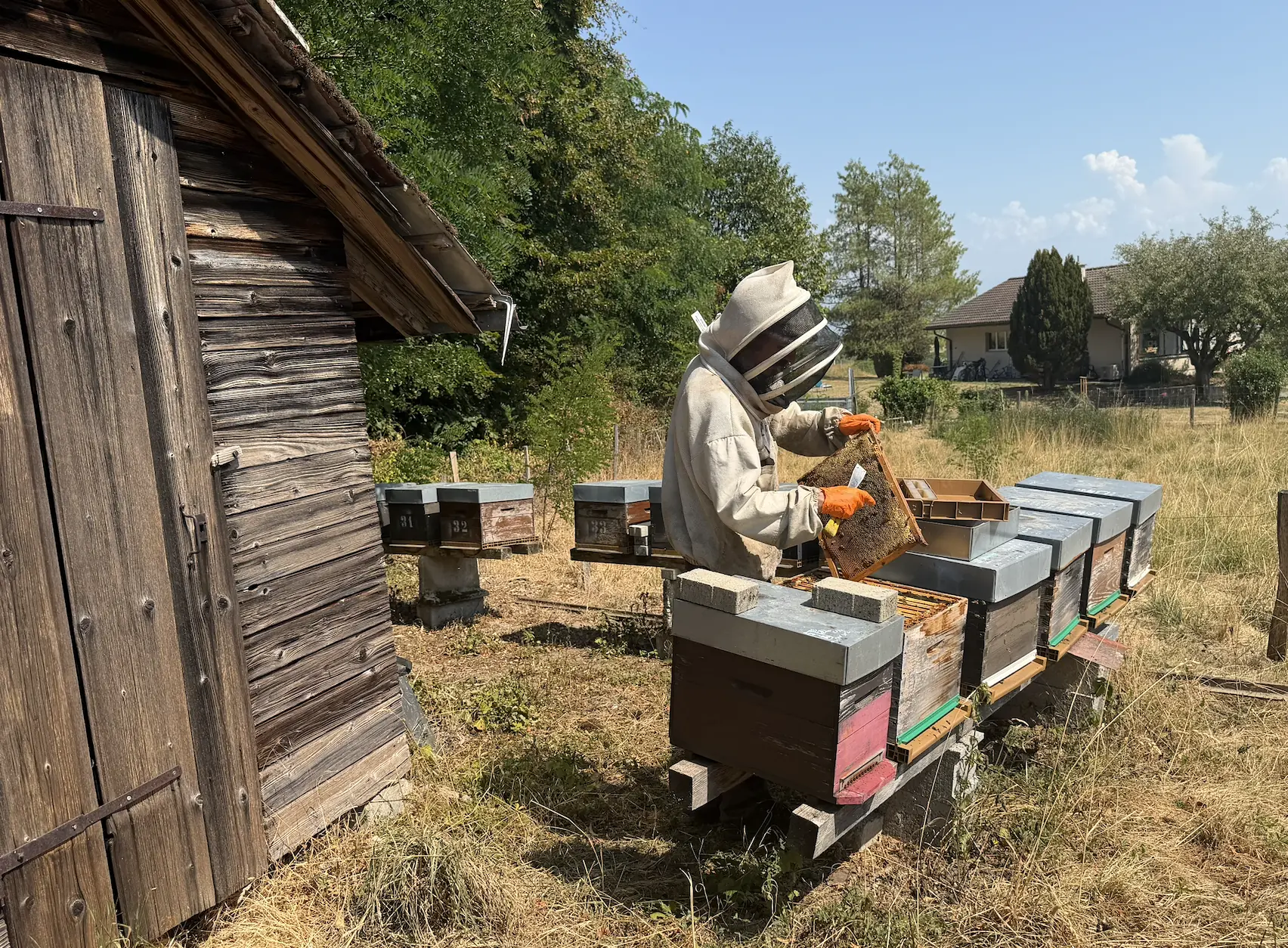
Thomas set up his first hives in 2012, in Apples, in the Morges district. Since 2018, the operation has been Bud-certified (Bio Suisse), and his apiaries now span several municipalities in the canton of Vaud, from the shores of Lake Geneva in Allaman to the foot of the Jura in Mont-la-Ville, passing through Etoy, Yens, and Denens.
His philosophy: adapt to his bees, not the other way around. He chooses each location for its biodiversity, giving his colonies generous access to pollen and nectar. Some of this pollen is also harvested separately: a true little nutritional powerhouse, rich in proteins, vitamins, and essential amino acids, to sprinkle on yogurt, porridge, or a smoothie.
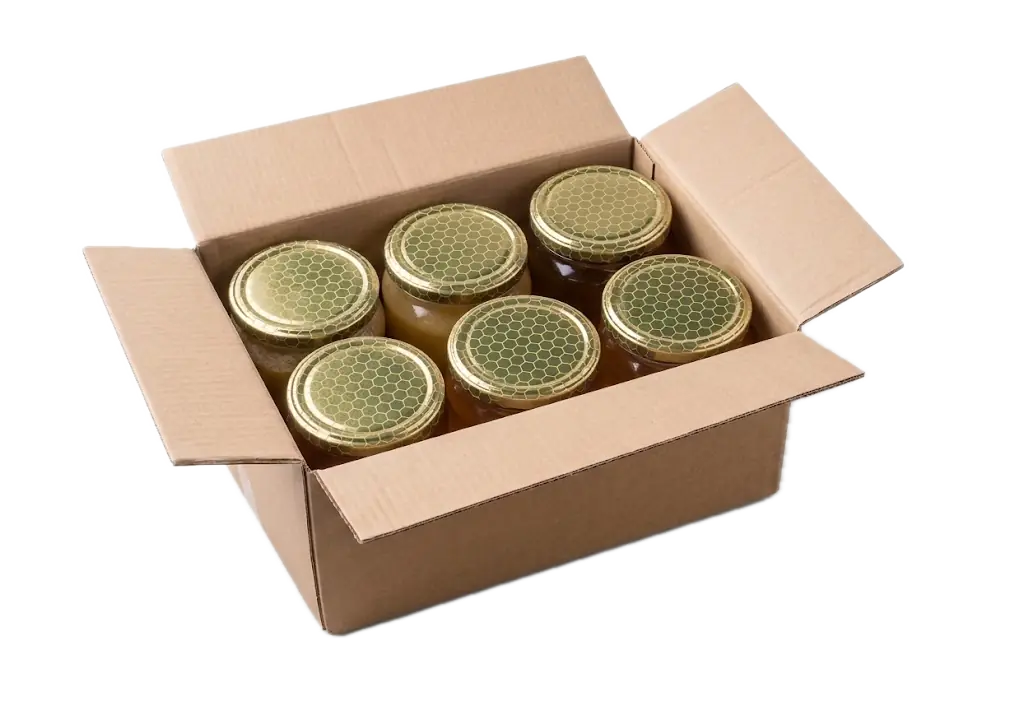
One-time delivery, outside Uglyfruits subscription
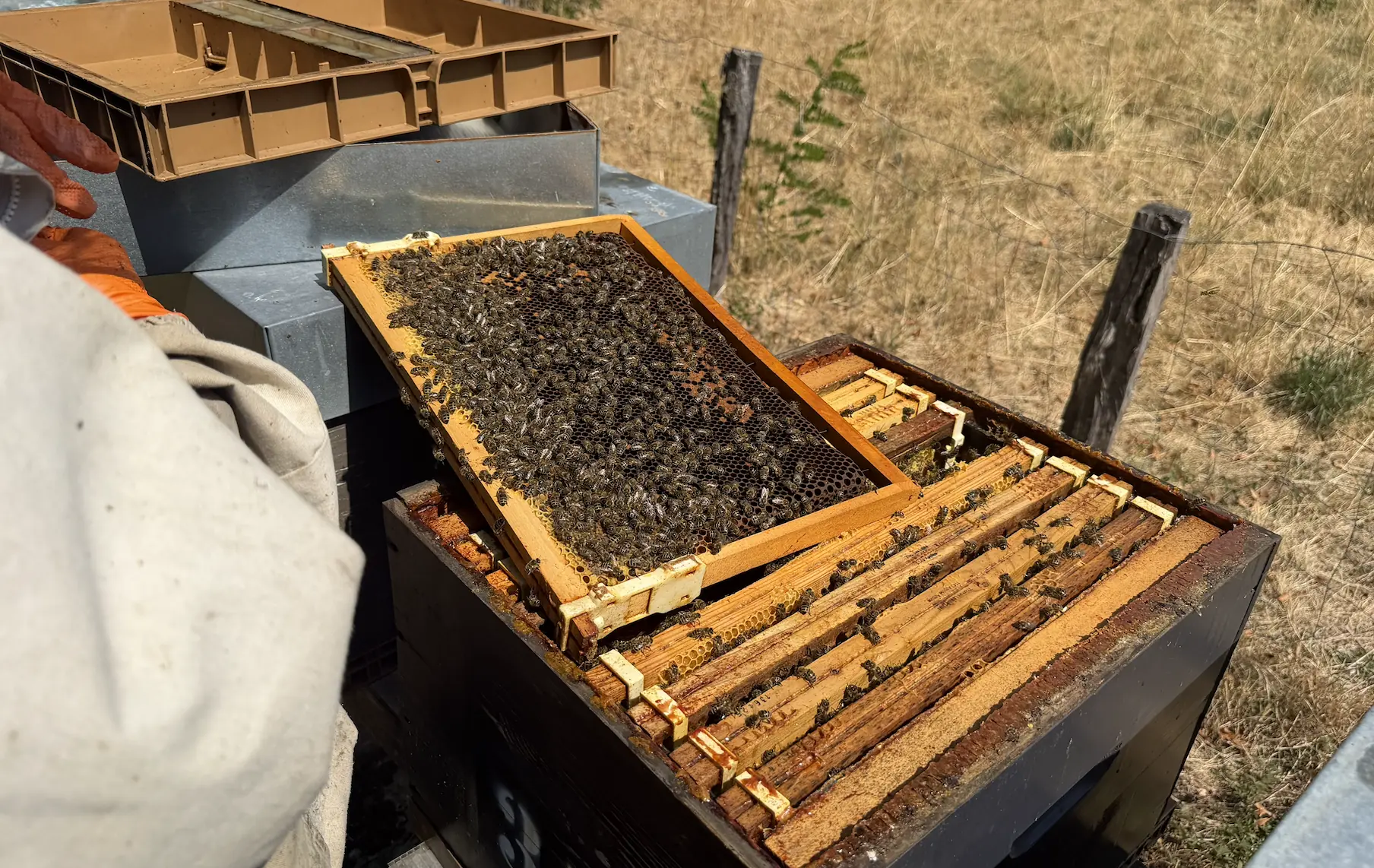
Behind the Bud (Bio Suisse label), there are precise rules: hives made from natural materials, bees that overwinter on their own honey and pollen rather than industrial sugar, no synthetic chemical treatments against varroa, and apiaries located on surfaces that are themselves organic.
Bud honey can’t exceed 18% humidity, ensuring better preservation: properly stored, away from light, a jar can keep for several years. Enough to set a few aside for a ready-made Christmas gift!
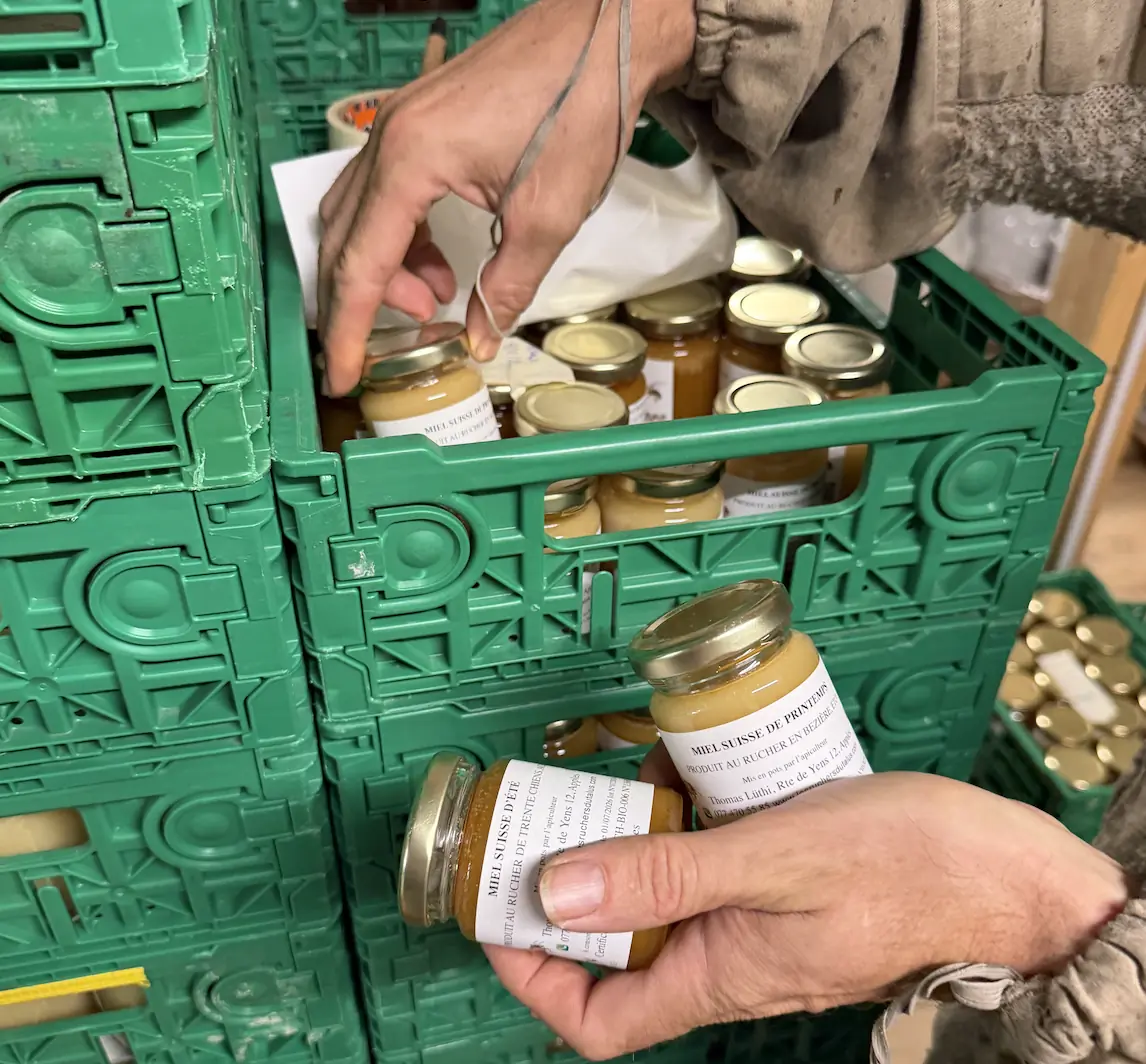
Honey is tasted a bit like wine: you observe its color, smell its fragrance before even tasting it, then let it melt in your mouth to unfold its aromas, rather than swallowing it right away. Its taste depends almost entirely on what the bees foraged, so on the season and the landscape around the hive.
Spring honeys, harvested from late March to May, stay light and mild: the very first flowers dominate, with light, floral notes.
Summer honeys, harvested from late May to July, turn amber and get bolder: later nectars, forest honeydew, a rounder and more intense palette.
Same beekeeper, several apiaries and seasons, honeys worlds apart from each other! Plenty to have fun comparing them, spoonful after spoonful.
Don't miss our next rescues
The next flash offer is coming very soon.
Subscribe to the newsletter to be the first in line!