


You loved them in spring, and now they’re back. Halloween’s over, so you can put away the costumes—except for the pirate bandana: the Cococorsaires are back in action.
This time, the best-before date falls at the end of November. That’s basically tomorrow, and that’s precisely why retailers don’t want them anymore. But a best-before date indicates optimal quality, not a consumption limit—and for dried beans stored in a dry, dark place, the difference is huge. They’ll keep for a very long time after that date without losing anything.
New this time: two sizes. A large one for those who’ve already adopted beans from Seeland, and a smaller one for those who just want to taste before committing.

In 2024, Aare Bio, Bioleguma, and Seeland Bio joined forces under the name Cococorsaires to give value to the part of their harvest that couldn’t find a place on shelves. A shared brand under the Passion Seeland bio:logique umbrella, and a first product: the Dörrbohne. The dried bean.
A two-century-old method
A staple in Swiss cuisine since the early 19th century, listed as culinary heritage, and nearly forgotten since frozen food came along. Mechanical harvesting, washing, hand-sorting—the beans are then blanched and gently dried: one kilo of fresh becomes one hundred grams of dried, denser in protein, iron, magnesium, and vitamin C. What doesn’t make it into the bag goes back as compost on the following year’s plots.

One-time delivery, outside of UglyFruits subscription
Away from light, in a dry spot, at room temperature—a cupboard does the trick. Once opened, transfer to an airtight jar and forget about it.
The best-before date isn’t a hard deadline. It’s an indicative quality date. For dried legumes, you can easily count on an extra year—we’ve got plenty of time!
Grown and dried in the Fribourg and Bern Seeland region, on the plots of Seeland Bio in Büchslen and Ried bei Kerzers, Aare Bio, and Bioleguma.
Taste quality and use
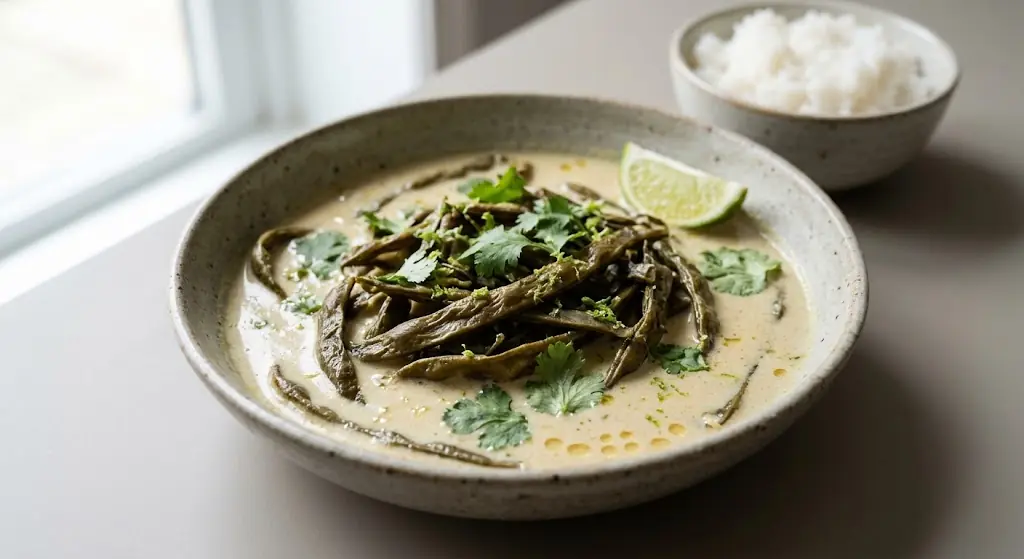
Firm texture once rehydrated, slight mealiness on the palate, vegetal aroma concentrated by drying. Once cooked, they’ll keep for three days in the fridge and freeze very well.
Production method
Mechanical harvesting, hand-sorting, blanching, then gentle drying to preserve nutrients. No synthetic chemical pesticides. The entire chain stays in Seeland, from field to bag. Certified 100% Bio Suisse!

Don't miss our next rescues
The next flash offer is coming very soon.
Subscribe to the newsletter to be the first in line!