
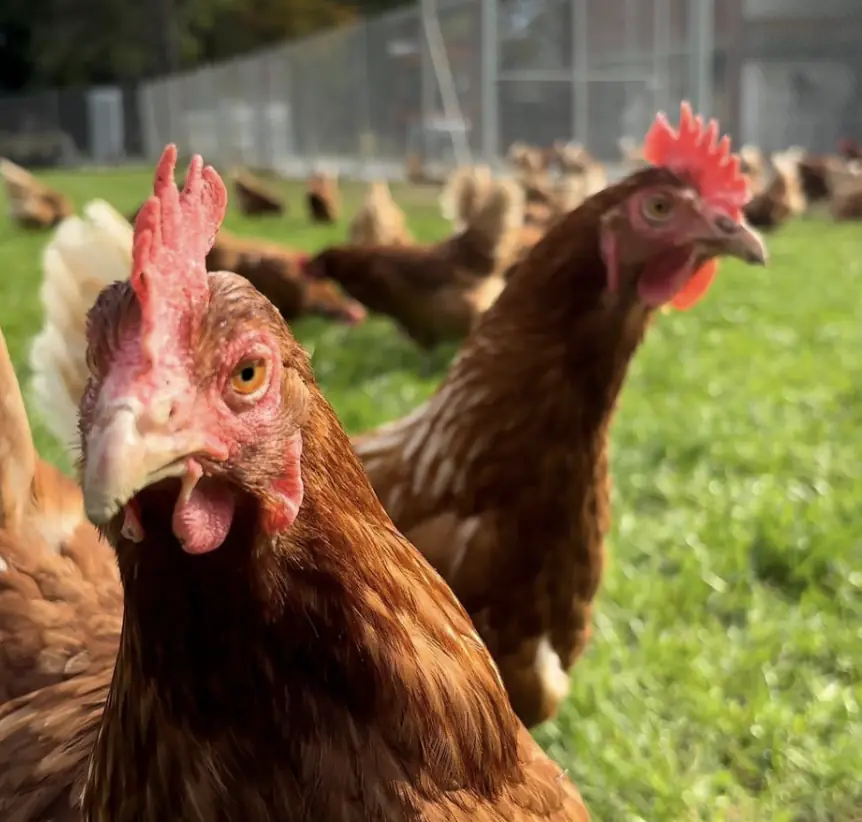
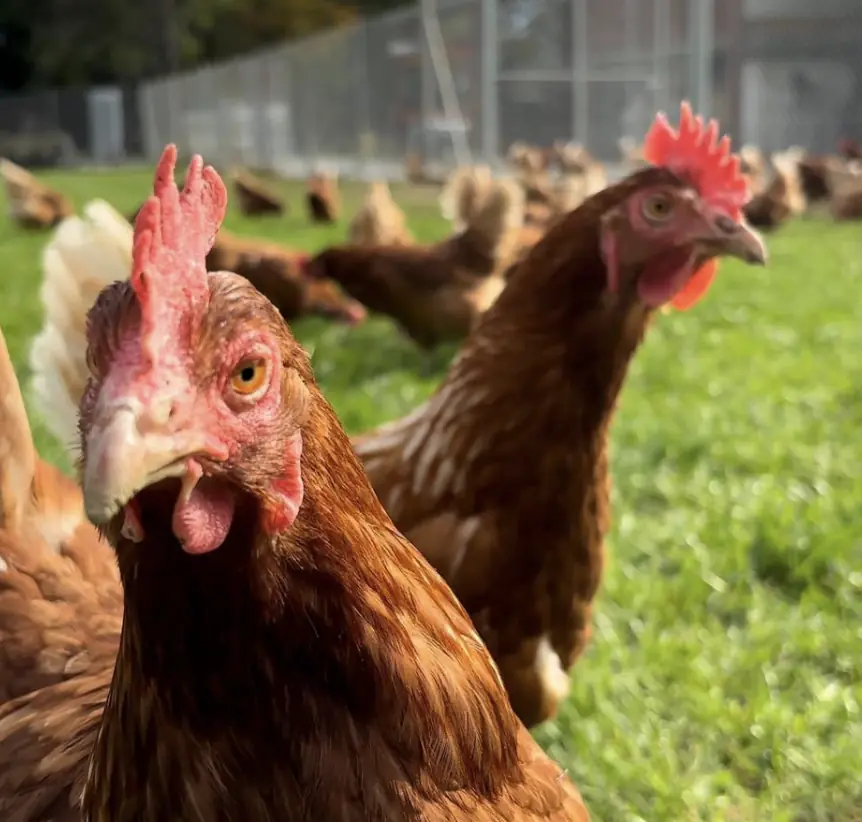
Ferme du Lignon, in Vernier (GE), is renewing its henhouses. These hens aren’t old or sick: they’re simply laying a bit less than at their peak production.
Reserve until September 11 at 12 p.m., directly with the farm. UglyFruits doesn’t sell anything and doesn’t collect any payment: we’re just connecting you.
On-site at the farm, September 29 and 30 and October 2. Minimum two hens per adoption, and a henhouse ready to welcome them.
UglyFruits’ mission is to give a second chance to what a rushed system discards too quickly, by betting on a different, more virtuous way of doing things, in the face of profitability thresholds that decide a bit hastily what deserves a future or not.
We’re not replacing an animal protection association: we’re using our community to give a few hundred hens a chance to avoid the slaughterhouse, with support from the expertise of Adopte une cocotte, and to raise awareness about a reality of the poultry industry that the general public doesn’t know well. We’re also working, in a second phase, on small early-laying eggs: another chapter of the same story!
At 12 months, a laying hen isn’t sick or old. Just less profitable. In the industry, that’s called being “spent.”
A laying hen starts laying around 18 weeks. Her first eggs are “small eggs,” under 53g, and therefore below the standard size. Most of them are sent to the industry and barely cover the cost of grain. The hen then reaches her peak production around 25-30 weeks. Then, after 12 months, her pace slows slightly and the shell of her eggs becomes too fragile for sorting machines and transport: she’s therefore replaced by a younger batch.
Farms actually have little room to maneuver: eggs aren’t sold at a high enough price to absorb a lower yield, outlets for “end-of-cycle” hens are rare, and the general public doesn’t know much about the reality of the poultry industry. At the end of the line, it’s off to the slaughterhouse, and in some regions of Switzerland, for lack of another outlet, gassing.
In collaboration with and with the help of the association Adopte Une Cocotte, which has been placing spent hens with individuals in French-speaking Switzerland for over 4 years, we’re introducing you to Ferme du Lignon, an institution in Geneva, and connecting you with them to potentially save more than 500 hens.
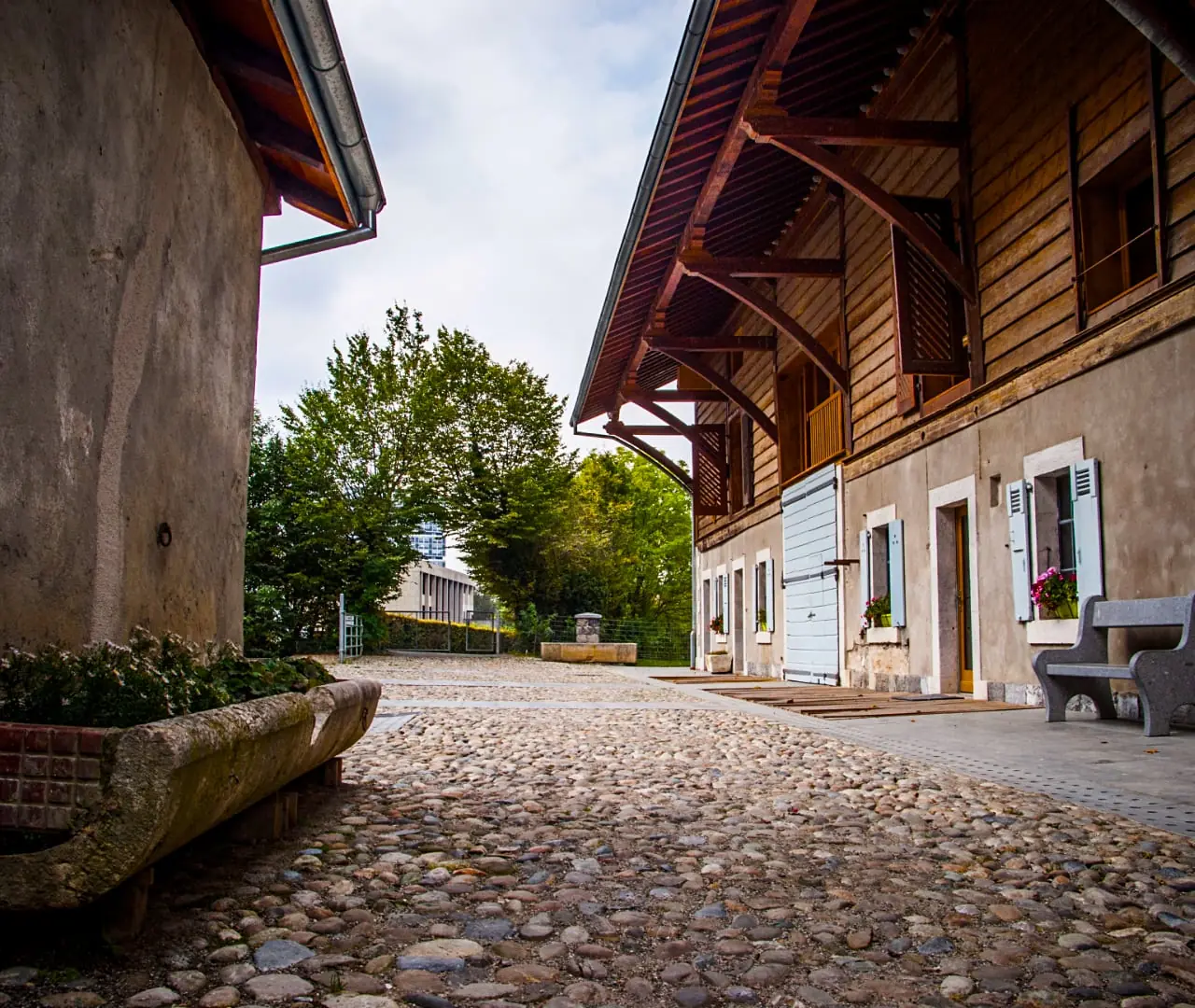
Ferme du Lignon, in the municipality of Vernier, is an urban family farm that has existed since the 15th century, long before Geneva came to surround it.
Since 2012, under the impetus of the Meyer family, the farm has transformed into a multi-faceted living space: livestock, crops, but also hospitality and education, with visits for schools.
On the livestock side, 5,000 laying hens (Lohmann Brown) live spread across three free-range henhouses. On the crop side, 2,000 m² of organic market gardening and 1.5 hectares of vineyards complete the estate. The farm also sells directly at its market.
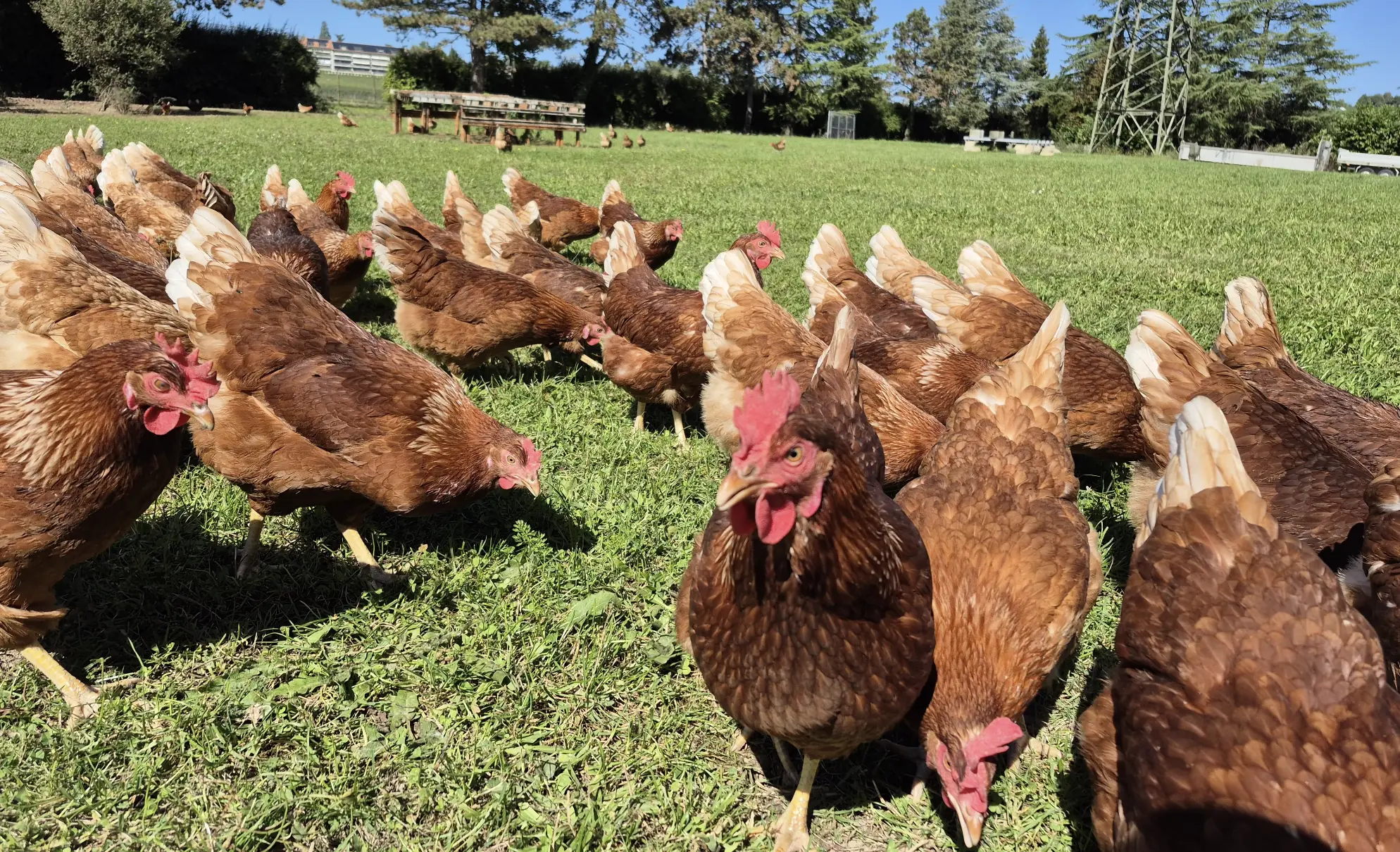
An adopted hen needs an appropriate space and a few precautions upon arrival. Here’s what you need to have in place.
The henhouse must be 100% secured against predators (foxes, martens, raptors) and closed every evening, with enough perches. During the day, hens need a space of at least 50 m² where they can roam freely with water and food points, lined nesting boxes, a sheltered area, a dry area, greenery, and a sunny spot. Climate-wise, the key is a dry and well-ventilated henhouse, without drafts, which is the real risk in winter.
A hen should never be adopted alone: minimum 2 hens, as they’re social animals. And by taking them in, you legally become a poultry keeper, and registration with your canton is mandatory.
Upon arrival, keep your hens for about a day in a rather dark and not too large space, giving them time to acclimatize. Their diet is omnivorous, based on balanced seed mixes, with water accessible at all times. If you already have hens at home, never introduce a single newcomer alone, she risks being harassed by the existing group. Introduce at least two new ones at a time, in a reasonable proportion to the existing flock.
For more information, the Federal Food Safety and Veterinary Office (FSVO) publishes a complete official guide: “Keeping chickens correctly.”
You can also find more information at: adopteunecocotte.ch
UglyFruits doesn’t sell hens and doesn’t collect any payment: our role stops at connecting you. Reservations and payment are made directly with Ferme du Lignon.
You now have all the essential information to welcome a hen in good conditions. Here are the contact details for Ferme du Lignon to take the next step.
Pickup at the farm:
Remember to bring your own transport crates, a sturdy cardboard box of approximately 65 x 31 x 24 cm, with ventilation holes on all sides, for a maximum of 2 to 4 hens.
commande@ferme-du-lignon.ch — or by phone, SMS, or WhatsApp at 076 495 80 30 (9 a.m. to 12 p.m. and 2 p.m. to 4 p.m.).
Oh no, it's already sold out
The next flash offer is coming very soon.
Subscribe to the newsletter to be the first in line!