
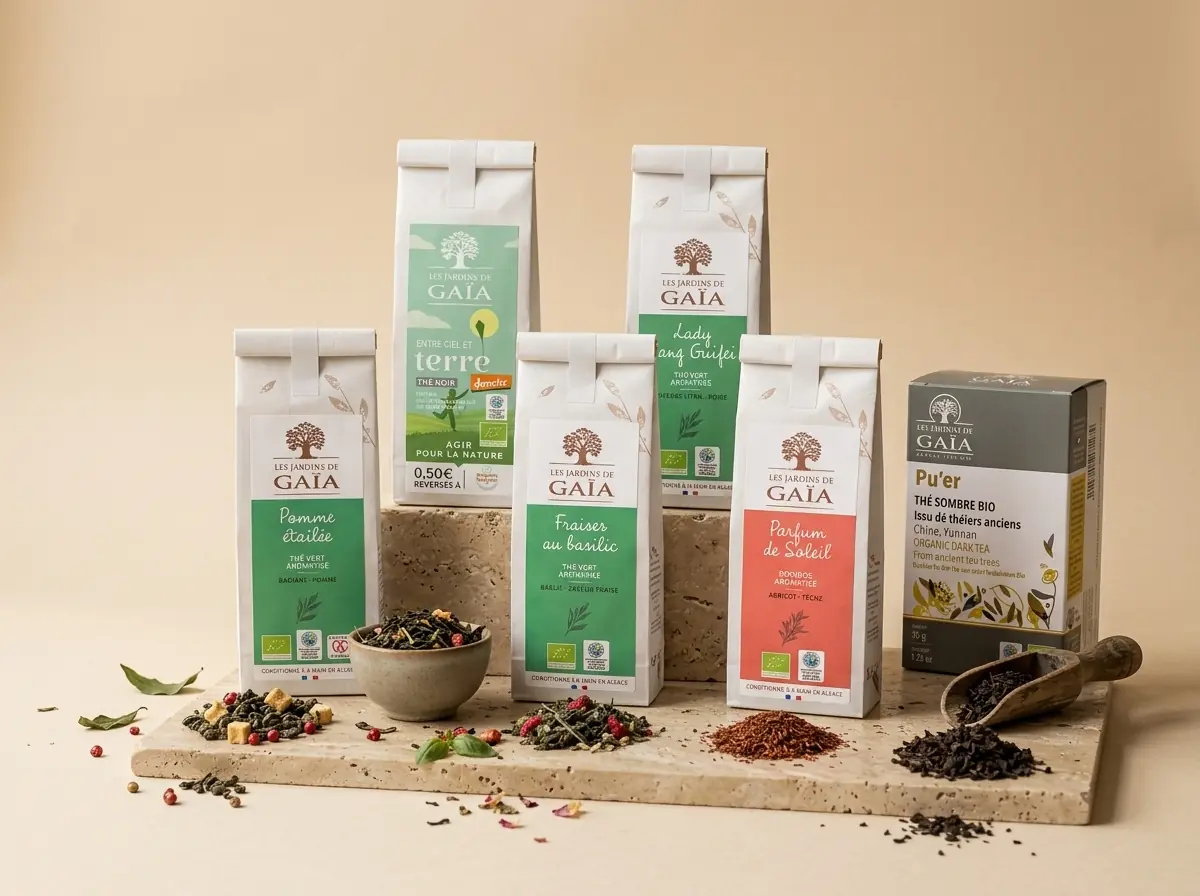
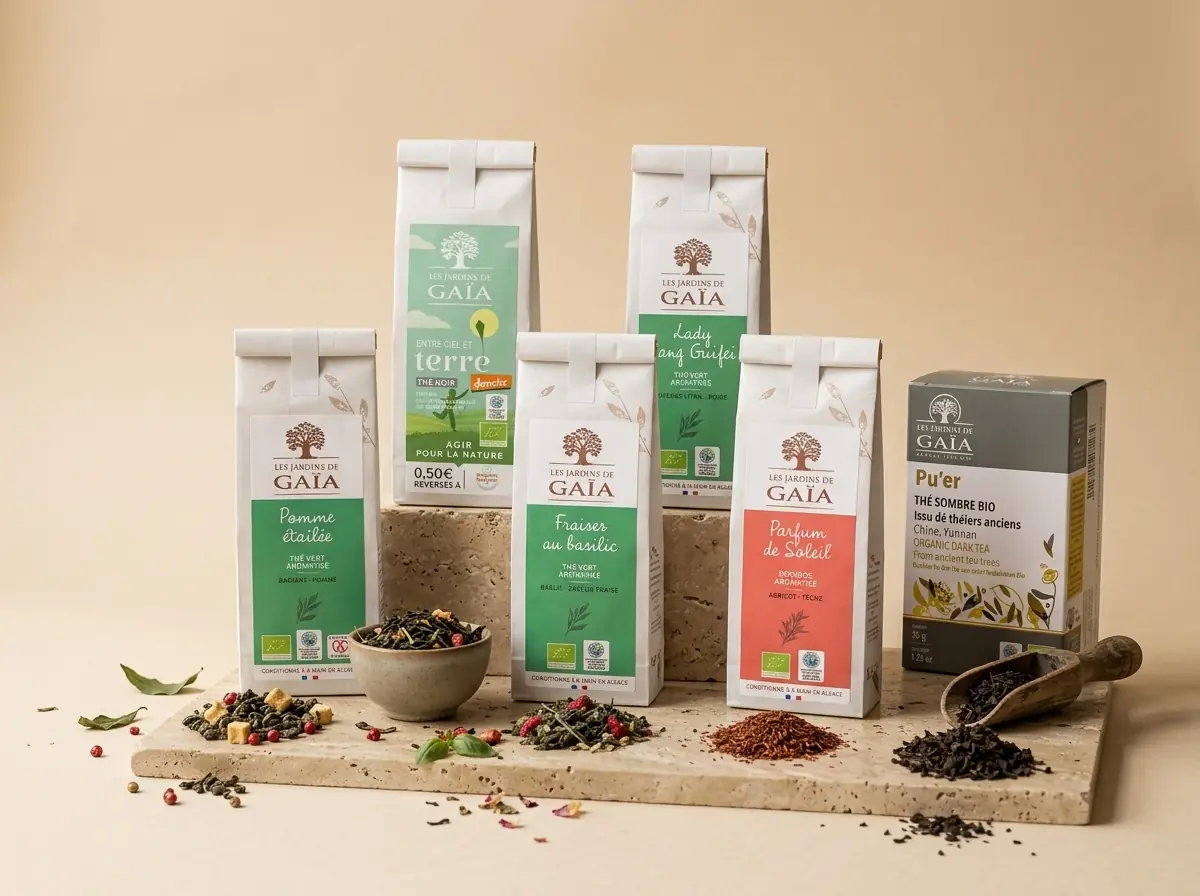
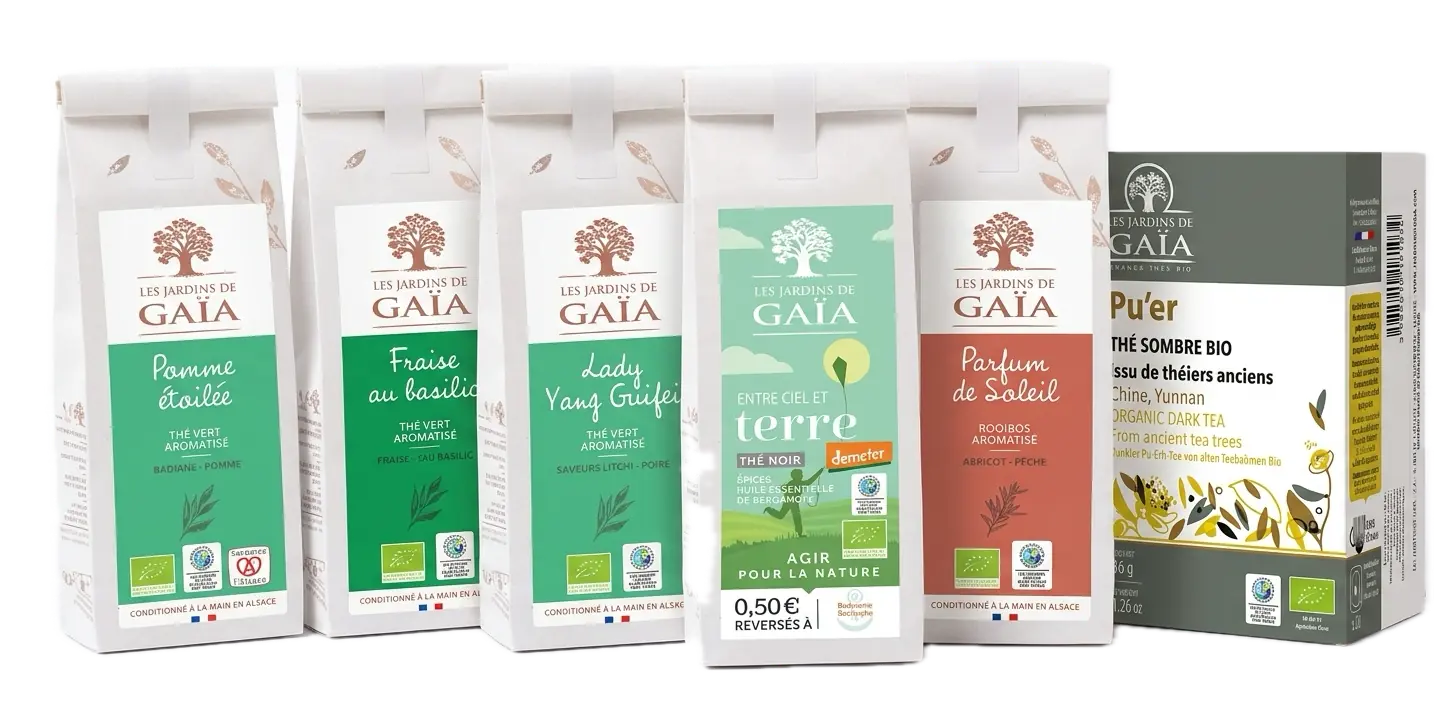
Six organic and fair trade teas from Les Jardins de Gaïa, to enjoy warm this winter or give as a Christmas gift.
At Les Jardins de Gaïa, every tea is given a best-before date 24 months out. Until that date, nothing changes in your cup! The dates on these teas run from September 2027 to June 2029. Despite these distant dates, shops no longer want them: they look for longer dates on their shelves. On top of that, the Lady Yang Guifei was produced in too large a quantity, and the Pu’er tea bags are leaving the range.
So rather than leave these teas sitting in a warehouse, Gaïa is letting us have them at a reduced price, and we’ll deliver them to you just before Christmas.

A family-owned and independent tea house, based in Wittisheim, Alsace, and 100% organic since it was founded in 1994.
Les Jardins de Gaïa buys their teas directly from producers, mainly small farmer organizations, in 24 countries. The leaves are then blended and packaged in small batches at their workshop in Alsace. The company has been Demeter certified (biodynamic) since 1995 and is a member of the World Fair Trade Organization.
The company employs 80 people and works with two ESATs, organizations that employ people with disabilities.
One-time delivery, outside of Uglyfruits subscription
Tea is sensitive to three things: humidity, light, and strong odors.
Keep each bag tightly sealed, or pour it into an airtight container, in a dry cupboard. Keep it away from coffee, spices, and anything with a strong smell: tea absorbs nearby odors.
Smart tips
For the three green teas, let the water cool a bit after boiling: from 75°C for the Lady Yang Guifei to 90°C for Pomme étoilée. Water that’s too hot makes them bitter. Use 2 g per cup, about one heaping teaspoon, and steep for 3 to 4 minutes.
Pu’er steeps quickly, 1 to 2 minutes at 90°C, and the same tea bag can be used a second time. Parfum de soleil can handle boiling water and a long steep, up to 10 minutes. Caffeine-free, this rooibos can also be enjoyed in the evening, and it’s delicious cold: steep it and then keep it in the fridge for a refreshing drink.
Taste and use
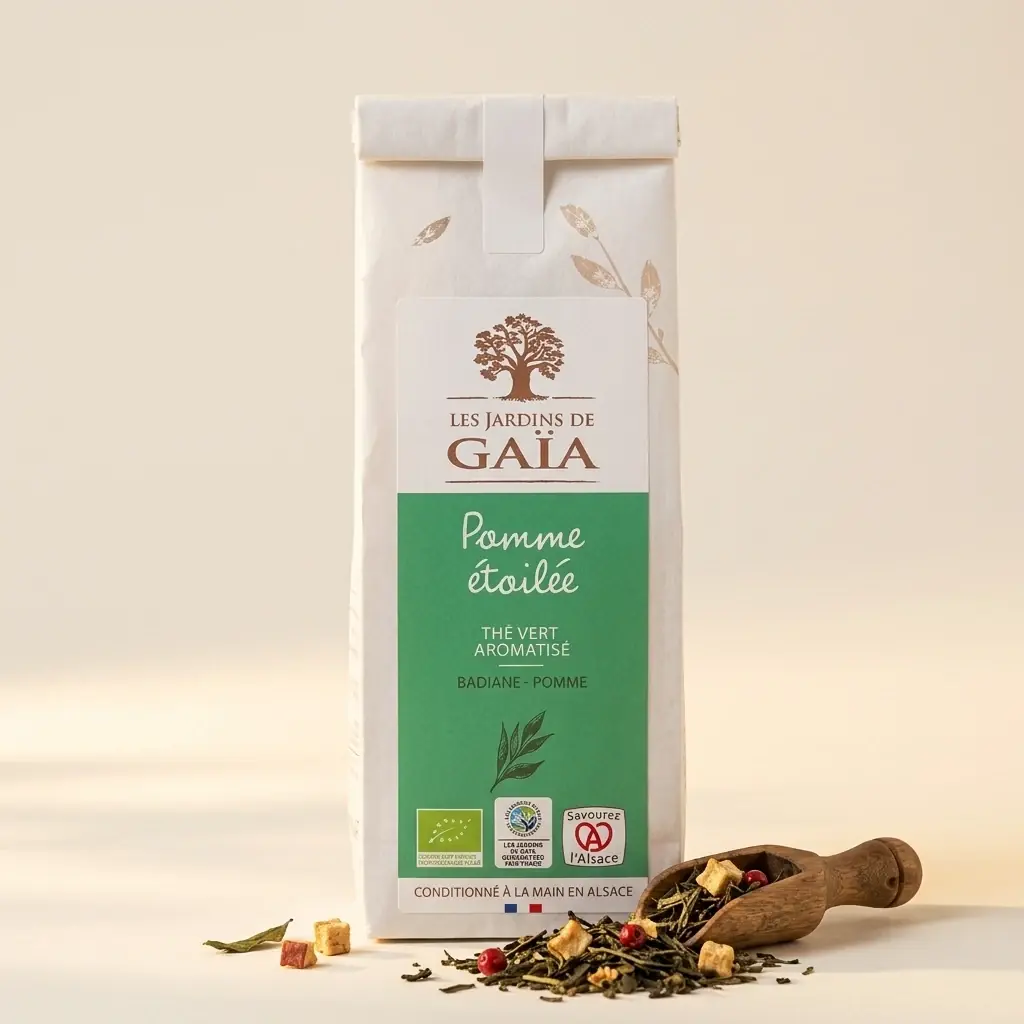
A green tea with apple pieces, star anise, cinnamon, ginger, and a few pink peppercorns. Round, slightly tangy, with the anise note of star anise. It’s the Christmas blend from Les Jardins de Gaïa. Water at 90°C, 4 to 5 minutes.
Did you know?
Star anise is the fruit of a tree native to southern China and Vietnam. It’s picked while still green, just before ripening, then dried in the sun until it turns reddish-brown.
Taste and use
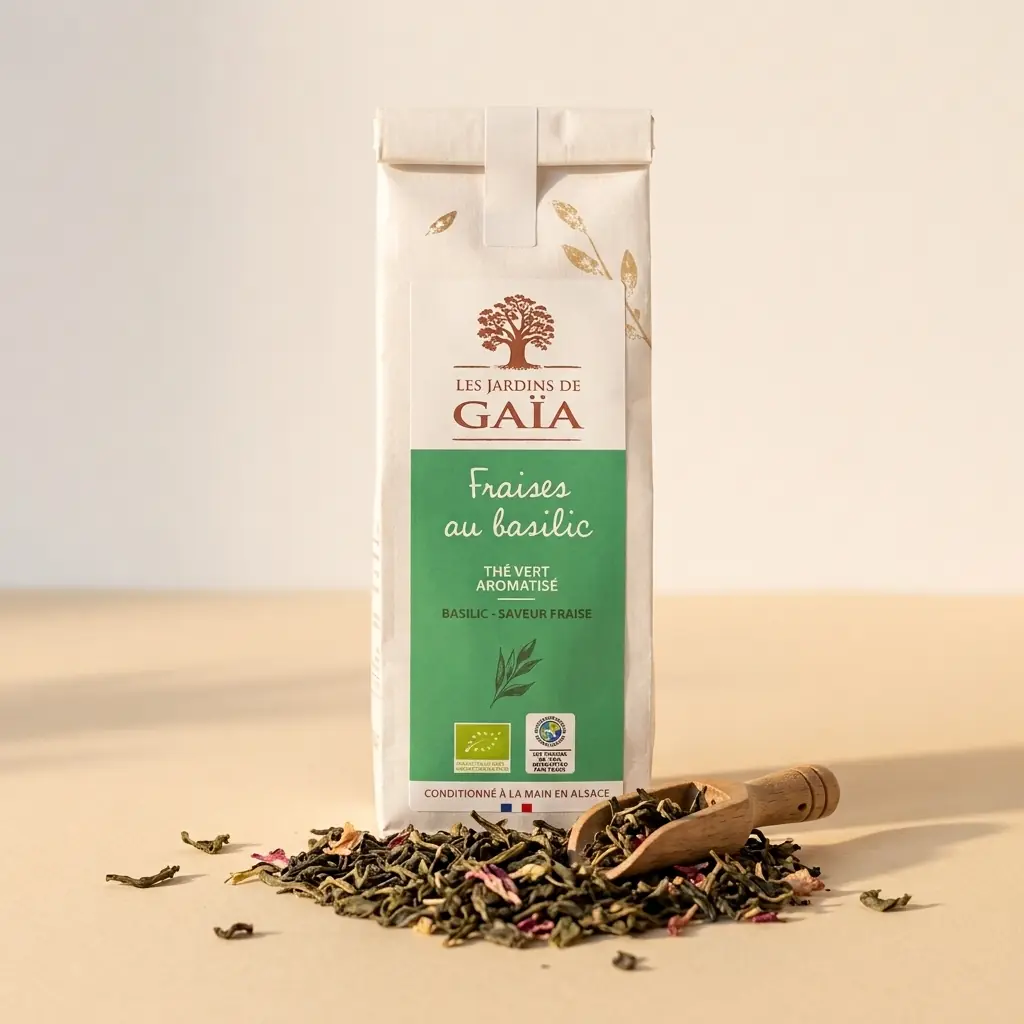
A strawberry green tea, lifted by basil: the fruit first, then an herbal freshness. Water at 85°C, 3 to 4 minutes.
Did you know?
The leaves for this tea come from three countries: China, India, and Vietnam.
Taste and use
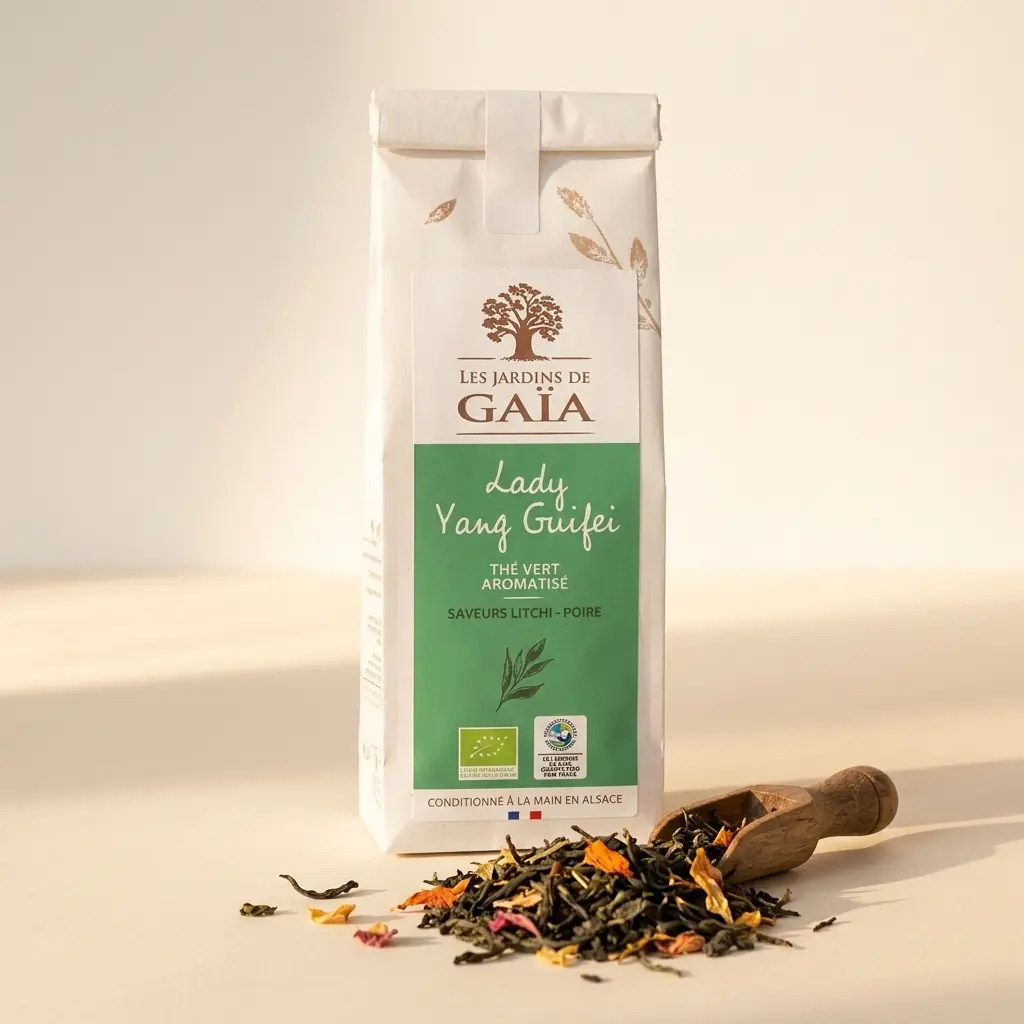
A lychee and pear green tea, fresh and fruity. It steeps in cooler water than the others, at 75°C, for 3 minutes.
Did you know?
It’s named after Yang Guifei, the favorite consort of Chinese Emperor Xuanzong in the 8th century, who loved lychees. According to tradition, riders would relay to bring them to her fresh from the south of the country.
Taste and use
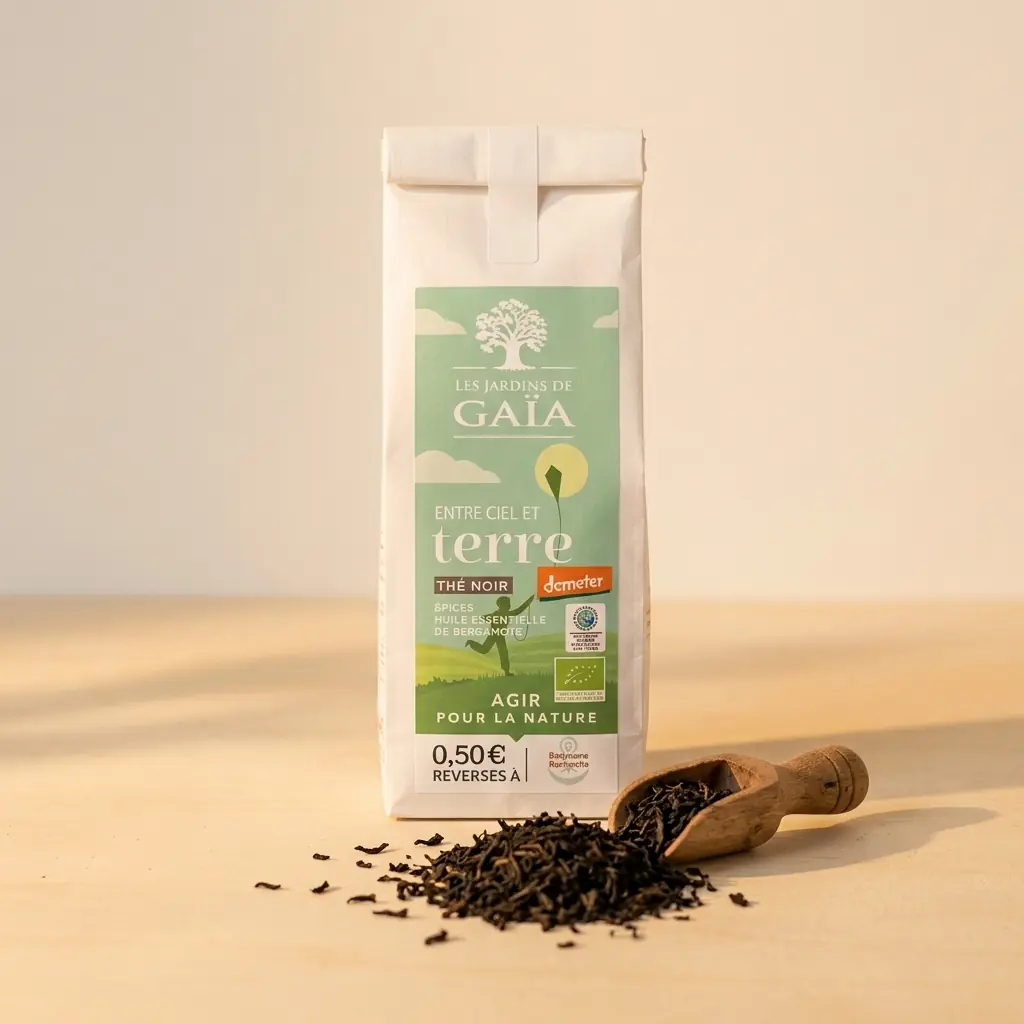
An Indian black tea with spices (cinnamon, ginger, clove, black pepper, cardamom), with a touch of bergamot. Water at 90°C, 3 minutes. Heated with a little milk, it makes a winter chai.
Did you know?
Bergamot is the citrus that gives Earl Grey tea its fragrance. Most of the world’s harvest comes from a narrow strip of coast in Calabria, in southern Italy.
Taste and use
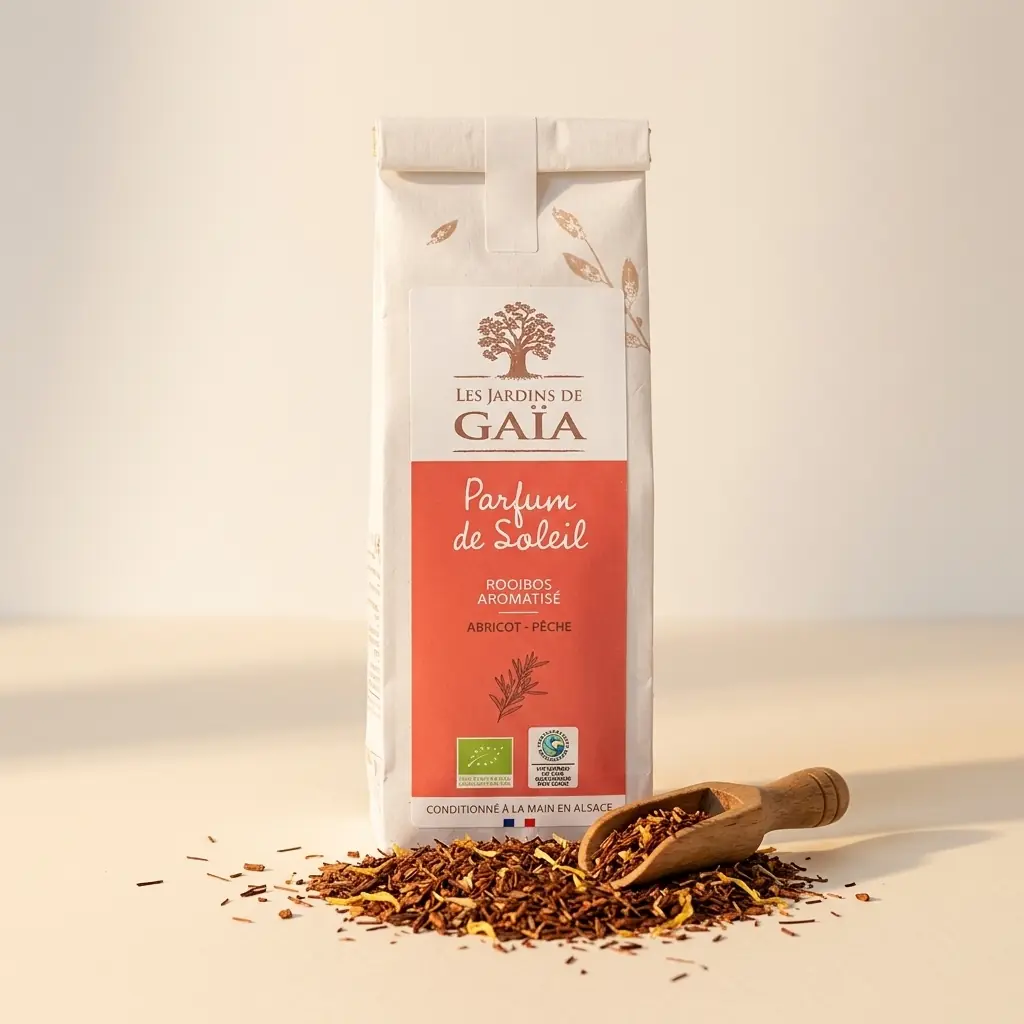
A peach and apricot rooibos, smooth and caffeine-free. It can handle boiling water and a long steep, from 5 to 10 minutes. It’s perfect for the evening, or cold after a night in the fridge.
Did you know?
Rooibos grows almost exclusively in one corner of South Africa: the Cederberg mountains and the neighboring Bokkeveld plateau, north of the Cape. This one comes from two small producer cooperatives, in Wupperthal and Heiveld.
Taste and use
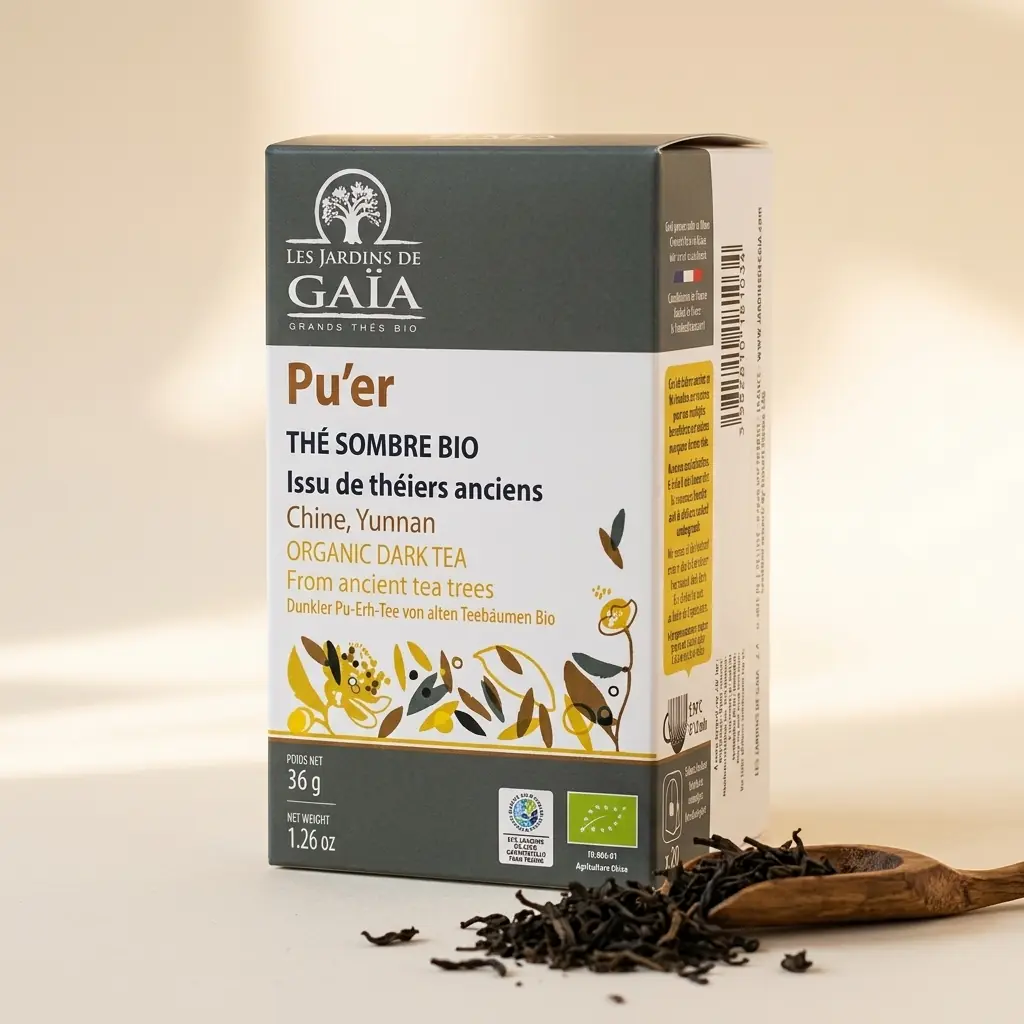
A dark tea from Yunnan, with an earthy aroma, from the Mannong producers’ association. It steeps quickly, 1 to 2 minutes at 90°C, and the same tea bag can be used a second time.
Did you know?
Pu’er is named after a city in Yunnan where tea from the surrounding mountains was once gathered. From there, it traveled to Tibet on horseback, along the “Tea Horse Road.” After drying, its leaves ferment, which gives them their dark color.
Don't miss our next rescues
The next flash offer is coming very soon.
Subscribe to the newsletter to be the first in line!